Pathways to Free Education
Pathways to Free Education
Presented by
Journal Referenced
Last Updated
This tool is intermittently updated to integrate new information sent to the authors.
16 June 2026
Within the throes of the movement for free education at South African universities in 2015–2016, Pathways converged as a group of people who wanted to continue discussing and planning the non-partisan movement and struggles for free education. The Pathways collective wanted to create space to learn about, participate in, and contribute to the debates around […]
Publishing
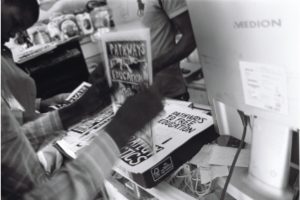
Pamphleting
Printmaking as Protest
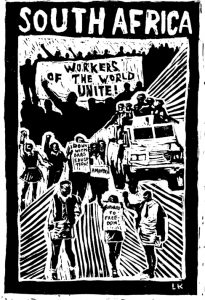
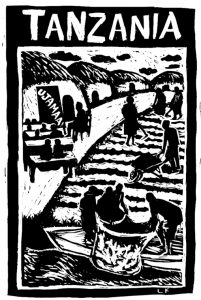
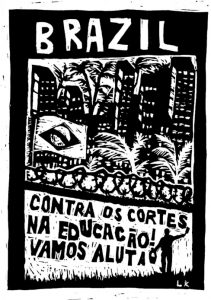
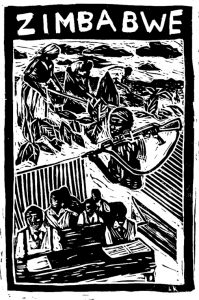
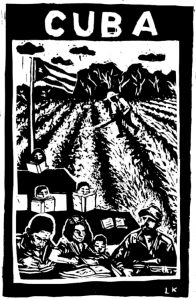
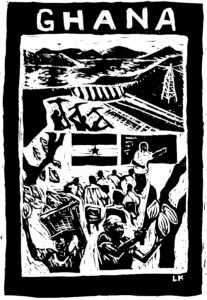
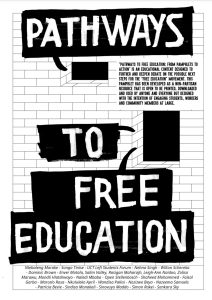
Pathways to Free Education
Strategy and Tactics
Third World Education and Social Welfare Programs
Groundings
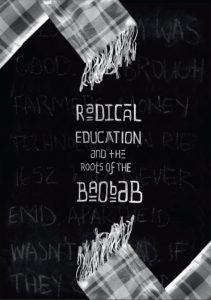
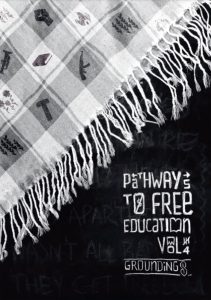
Film
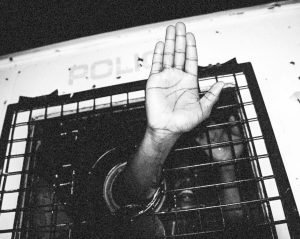
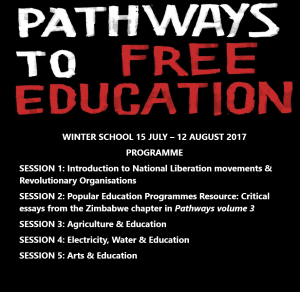
Winter School
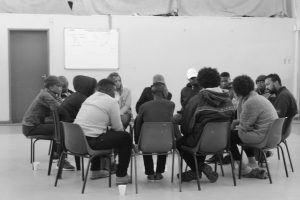
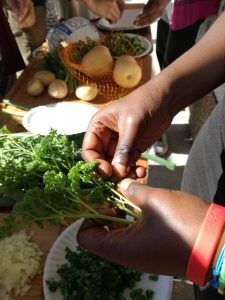
Solidarity
The Interim
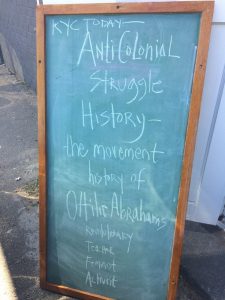
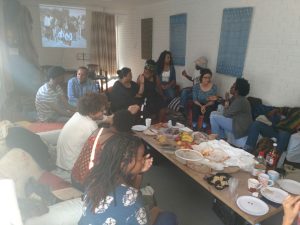
Pathways’ work has been based on a “community-building” approach to publishing. By this, I mean gathering people and getting perspectives on free education — the movement, histories, and debates — from people working and organizing in different fields and different places. This includes students from different institutions and levels, workers and organizers from trade unions, progressive academics, social movement activists and others. Our early efforts, which included late-night editing sessions at home and long meetings in deserted, after-hours University of Cape Town (UCT) buildings, came together as Volume I: Pathways to Free Education in July-August 2016.
Volume II: Strategies and Tactics was then published in October 2016. The pieces in this volume range from the role of media in movements, guides to self-care for naked protest, reflections on hunger-strike, and occupation as methods, to cartoons on organizing community education sessions, as well as tips on chairing meetings.
Histories of experiments in educational and cultural projects from various parts of the world — with a particular bias toward the African continent and the Global South — have been part of a concerted attempt to broaden our political imaginations beyond the current moment in Cape Town. Volumes I & II featured pieces on education politics in Ethiopia, Ghana and Brazil, in addition to contributions from local organizations in the form of poems, interviews and essays. This sensibility has been central to Pathways: understanding that any radical pan-Africanist project will, by necessity, start with us learning about other parts of the continent.
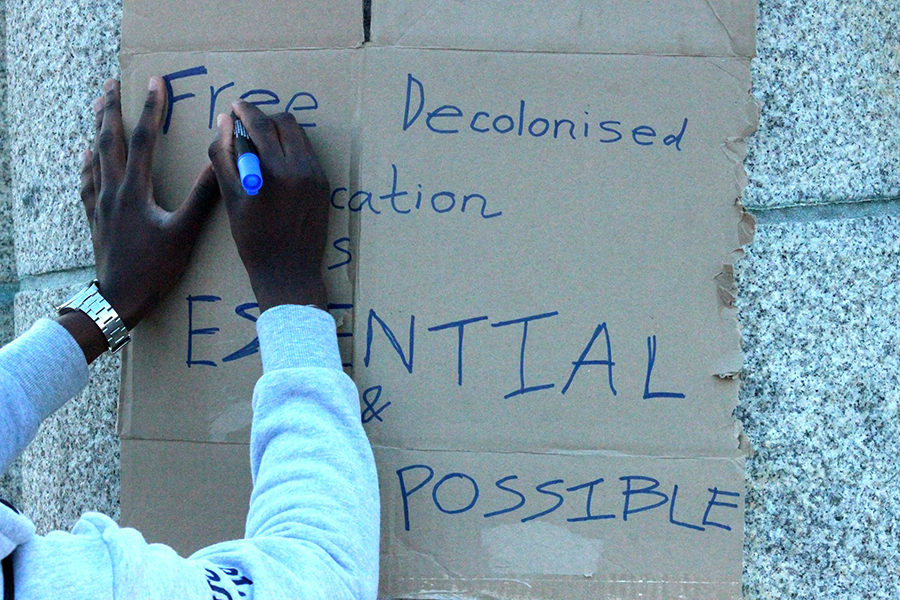
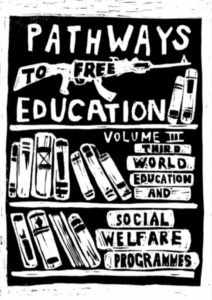
This “reaching out” was extended in Volume III: Third World Education and Social Welfare Programmes, which was published in August 2017. The third volume contains chapters on Tanzania, Ghana, South Africa, Zimbabwe, Brazil, Cuba, the U.S., and Puerto Rico. Many of the contributors come from and/or live in the contexts about which they were writing. The chapters vary in form and content: looking at legacies of past organizing and radical social programs, interviews with people involved in historical and contemporary struggles, as well as responses to other authors’ essays. This booklet has been put together explicitly for the purposes of facilitating discussions, reading groups and the hosting of independent popular education spaces. This opens up to some of the dynamics and processes and relationships and workshops that have been created around the publications, which we understand as part of “publication” broadly.
– this text is excerpted from ‘Pathways to a Free Education: Knowledge Production, Community, and Solidarity’ by Asher Gamedze as published in Funambulist, March 2019. To read the full article click here.
[AUDIO] Interview with Alexander Twinokwesiga on publishing and distribution of African Literature
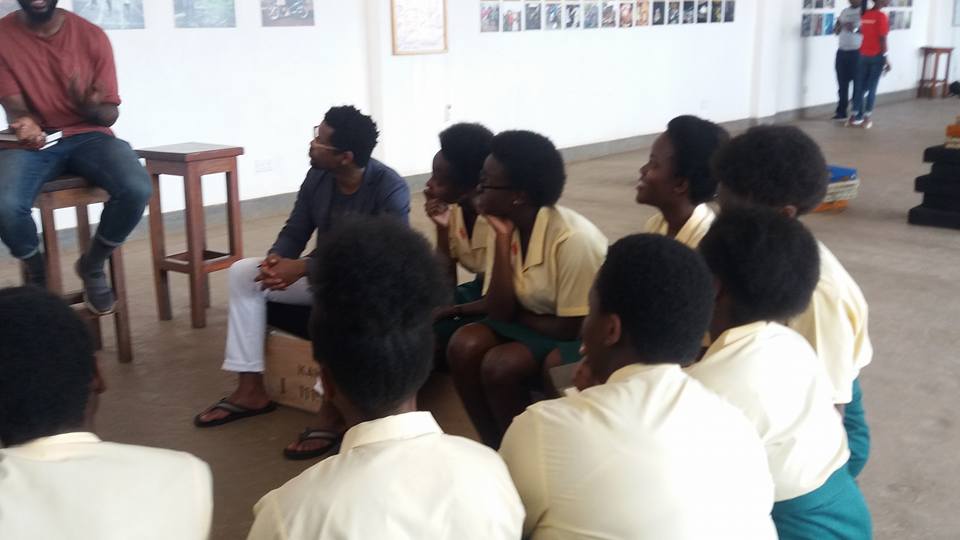
ON PROCESS
— [published in volume III of the ‘Pathways to Free Education’ series]
The origin of an idea is almost impossible to trace, however, the sparks that help concretise, or allow ideas to emerge in clearer form are often easier to trace. In the case of Pathways to Free Education the work of this popular education collective emerges out of the challenges in the mass student-worker action in South Africa in 2015 in particular. After a conversation with anti-apartheid activist and committed journalist Zubeida Jaffer where she reflected on the role of publishing and “writing where you are” in the struggle, the idea of a more targeted effort to engage in the processes of pamphleteering to tease out, open discussion and debate around issues facing the movement at a time began to flower across many independent contexts across the country.
Ours is merely a drop in the ocean of the work being conducted across the city, region, country and globe amplifying the urgent needs to address the roots of oppression and in particular the devastating impacts of colonialism.
This booklet has been put together explicitly for the purposes of facilitating discussions, reading groups and the hosting of independent popular education spaces.
The content has in some sense been collaboratively developed but due to many factors, not the least of which being time, energy and resources, much of the work has been done here without as much communication across chapters and pieces as we might have liked. The intent, as seen in a number of the chapters, has been to raise discussion within the booklet itself to undermine the very notion that because “it” is written or published “it” is valuable or “true” knowledge. Instead this booklet makes no claim nor aspiration to providing “true” knowledge as such but opens up conversations, contests terrain and demonstrates that by “writing where you are” and intentionally building on community we are able to look beyond what each of us can see individually.
This booklet contacts several prepared critical essays, many interviews and a timeline piece. This aspect of the process came about fairly organically.
Open calls to our networks were made to talk on a variety of issues arising out of Pathways to Free Education Volume 2: Strategy and Tactics. From the open calls contributors then offered to participate in their own ways. Where it was difficult to solicit a planned essay that would address specific points we used interviews to approach topic areas. Interviews were conducted via email in some cases or through recorded interviews done simply using cellphone devices and transcribing conversations. The hope here, by demonstrating the use of different types of sources, and by using self publishing (both online and in paper form) we are adding our voice to growing calls to encourage more writing and sharing of ideas. This volume, as an experiment, has also has been designed using no maximum word limit to encourage the authors to use freely the space they need to discuss an idea or concept.
Finally “on process” is a crucial theme to consider when going through this volume. Imperfect as it may be, the different, sometimes divergent Pathways presented here hopefully will go some way to “spark”, encourage or at the very least raise interesting points for your journey and the collective work to end all exploitative structural systems and the everyday practices they produce.
This publication is not applicable for the soliciting of any financial profit and can at most be sold by third parties for no more than the cost of paper upon which it is printed.
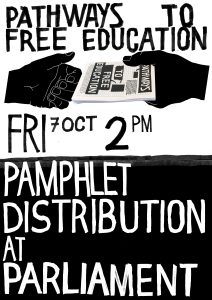
”Pamphleting tactics: Model for Pathways to Free Education
1. Collect interviews and articles and collate into a pamphlet/booklet from students, academic staff, workers and trade unionists.
Example – the first issue Pathways to Free Education
volume 1
2. Reach out to possible funders to sponsor printing of the booklet. So far approaching trade unions, NGOs and private individuals (sourced through social media) has been most effective. Many small donations go a long way.
3. Create forums and spaces for debate on the issues at hand and record where possible! Make use of cellphone recorders and cameras along with free online podcast & video sites such as mixcloud.com and vimeo.com
Example – a podcast: pathways interviewed community members, students, leaders & activists and uploaded the audio onto mixcloud which is freely accessible
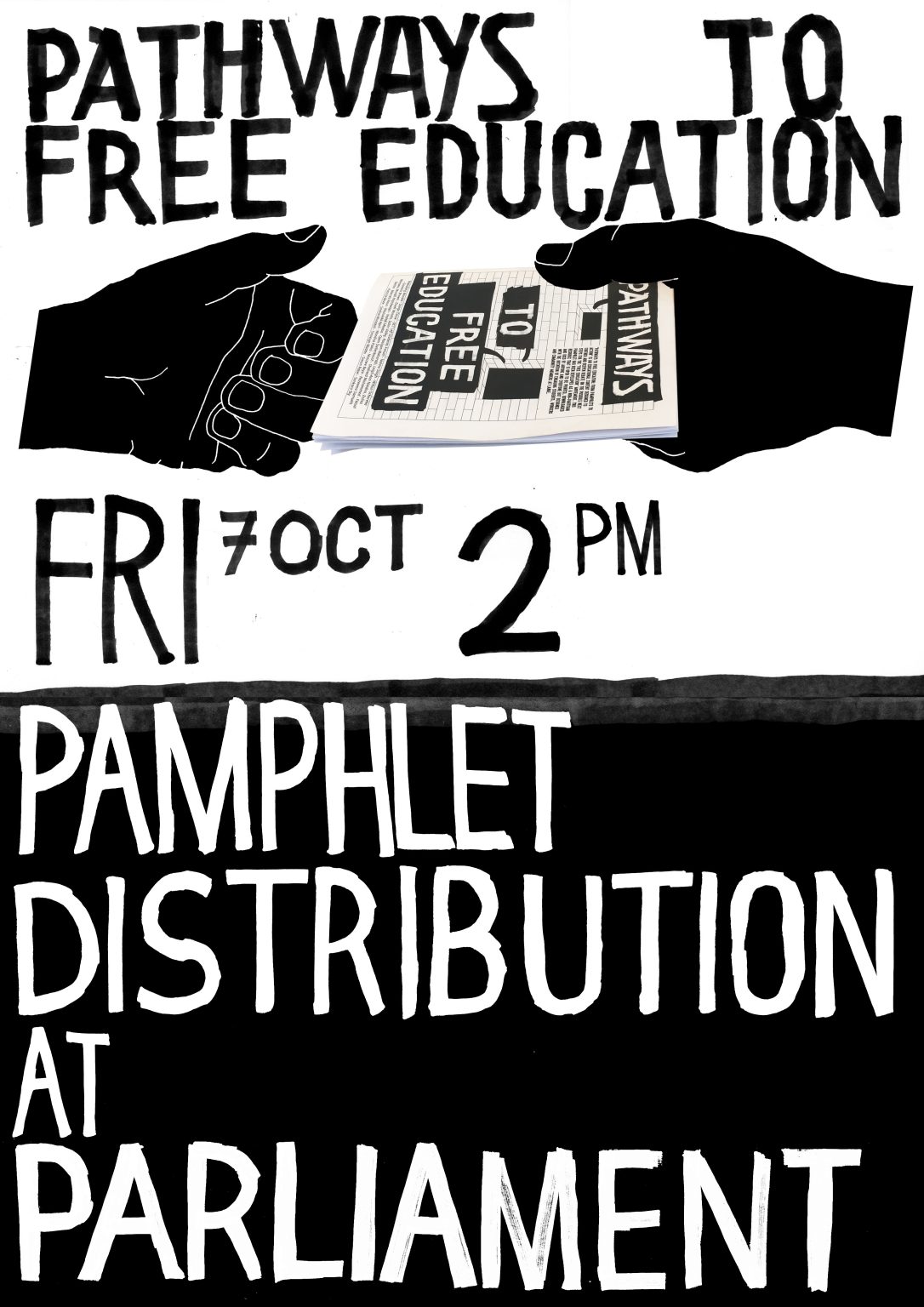
4. Choose strategic sites to gather and organise friends, family and colleagues to distribute your pamphlets and engage with people while handing out your material.
Useful tips:
- Interviews are often easier collect on a short time frame and their require a lot less from the participant than article, poems and pieces with fixed deadlines.
- Pamphlets come in many shapes and sizes. If the goal is to simply outline a position or advertise an event short 1 page or A5 formats can work well in high volumes. Booklets and longer length pamphlets are useful as resources for popular education sessions and deeper community engagement.
- Fundraising without an organisation behind you might be difficult! An approach that was useful for us was often to ask donors to pay directly to the printing companies to help assure them the funds were going to the right place!
- Working out the price per booklet or price per 100, 250 or 500 and soon might be a good way to reach out to small and medium size donors as it turns the request for funds into something practical.
- Language and accessibility is important! While it’s tough to get right, it’s important to consider the intended audience of your pamphlet and collect content accordingly. Where possible it might make sense to incorporate different languages or even host sessions to translate existing content into different languages to reach more people!
- Set reasonable, achievable goals! Whether it’s collecting 5 interviews or pieces a week or putting out a pamphlet in 1 month, laying out goals that are realisable given your team’s capacity are key for building morale and helping the project get off the ground!
On printmaking as Protest
Artist Leila Khan in conversation, excerpted from Pathways to Free Education, vol. III
Greetings Leila Khan, I just want to start off by appreciating the artworks you contributed to this volume 3! How long have you been using this form of print artwork, and what inspired you to get involved with it?
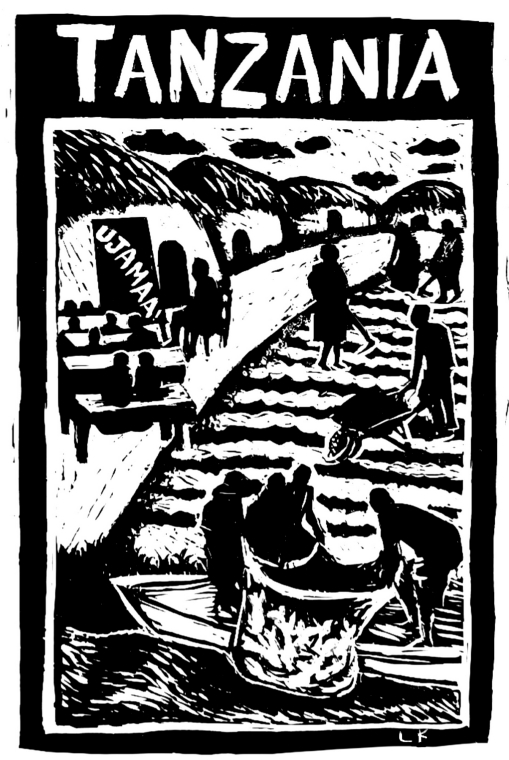
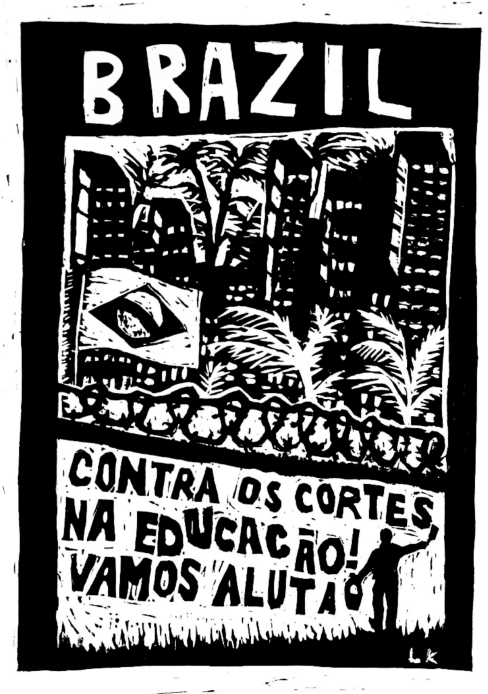
I started making linocuts about two years ago, but became interested in this form of printmaking in high school Art, after learning about the Rorke’s Drift Art and Craft Centre and other spaces for black artists that produced these kinds of prints during apartheid. Rorke’s Drift’s fine art section trained artists such as John Muafangejo, Azaria Mbatha, and Dan Rakgoathe, who produced really beautiful linocut prints during the 60s, 70s and 80s. Linocutting is a relatively inexpensive medium in that not many tools and materials are required, and is therefore a much easier form of art to experiment with. The ability to produce multiple prints from one linocut means that it is a more cost-effective way for artists to create art to sell, and is an ideal medium for resistance art in the form of posters and pamphlets. This accessible nature of linocut printmaking, which is specifically known as being a ‘democratic’ medium, is what I find most appealing about this technique. Beyond this, I am also drawn to how aesthetically striking linocuts are, which again shows that this medium lends itself to forms of protest art.
Can you explain the process that you went through to make these prints?
I usually start by creating a plan of what I want the print to look like by sketching and putting together different source images to figure out composition. The final image then needs to be transferred onto a linoleum block in reverse, so that when the you flip the linocut over to create your print, you do not create a mirror-image (this is especially important where a print contains words). There are multiple methods of transferring, and I am still experimenting to find what works best with the supplies I have. For some of these prints, I ‘transferred’ the image by drawing onto the linoleum directly with a marker. With others, I printed the design onto baking paper using a laser printer. The ink sits on top of the paper and is easily transferred by placing the image against the linoleum and scratching on the back of the paper using something sharp. Once the image is on the linoleum, I cut out the parts of the image that I do not want to be printed (i.e. the white parts) using lino or woodcutting tools of various sizes. Again, this requires thinking in reverse. When this is done, the ink is rolled onto the linoleum block and can be printed onto paper multiple times. From there, I try to choose the print where the ink has transferred most evenly, and then use a paintbrush to touch up any gaps.
Are there any particular artists who influence your work style and if so, what about them do you like or appreciate?
In trying to discover what my printing style is, I like to look through the work of those Rorke’s Drift artists I mentioned earlier. I appreciate that they each have very strong styles of their own, which shows the versatility of this medium. I find Muafangejo’s work particularly impactful because of how he used prints as way to make sense of his political context – specifically apartheid in South Africa and the liberation struggle in Namibia. He also incorporated text alongside his images, further allowing him to use prints and posters as a form of story-telling. I also look to the work of art collectives such as the Medu Art Ensemble and the Community Arts Project (CAP), specifically their posters, and try to imitate some of the aesthetics and symbolism of that era of resistance art.
Many people in this volume and before have highlighted the importance of art in its many forms in activism and radical politics more generally. What do you think about the role of artists in both popular education and movement building?
I think generally, artists who offer political and social commentary through their work engage in a form of knowledge production and knowledge sharing, particularly when this occurs outside of formal academic and gallery spaces. This work also plays a role in archiving these struggles, by creating a historical documentation of resistance. Political posters have been critical in mobilising masses around protest action, and in making the work done by social movements visible to an international audience. Medu, which operated from Gaborone, is a good example of the critical role creative resistance can play within broader social movement and education work.
Medu ‘cultural workers’ (the term ‘artist’ was rejected because it was seen to reflect elitism and individualism, and so that members would see themselves as part of a cultural community working within a context of struggle) took a collaborative approach to the production of art, involving all its members as well as the surrounding community in discussions around the imagery used to translate political messages. Medu also engaged with South African cultural groups doing similar work across the border, such as CAP. So both their process of creating art, as well as the art itself, played a large role in popular education and developing political consciousness. I think these histories show the importance of social movements cultivating artists within their own ranks where possible (as opposed to relying on outside artists and designers who are less connected to the movement’s ideals) who can do the work of decolonising how information is shared and who can push how movements operate within communities in creative directions.
Linocuts by Leila Khan
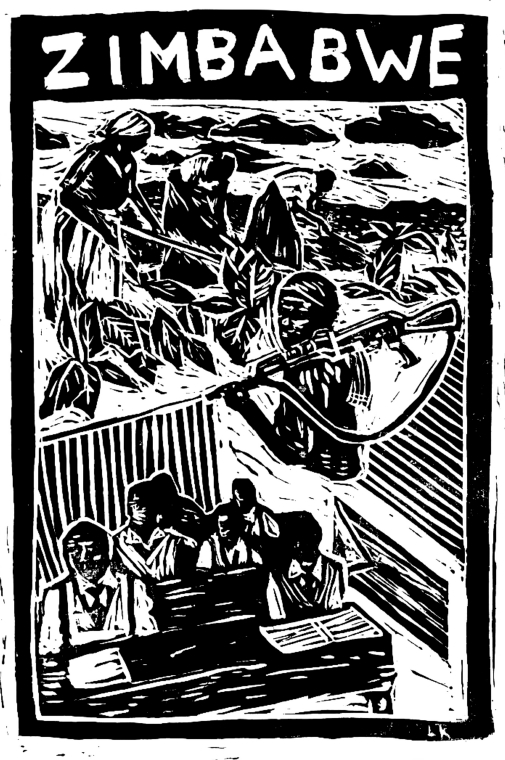
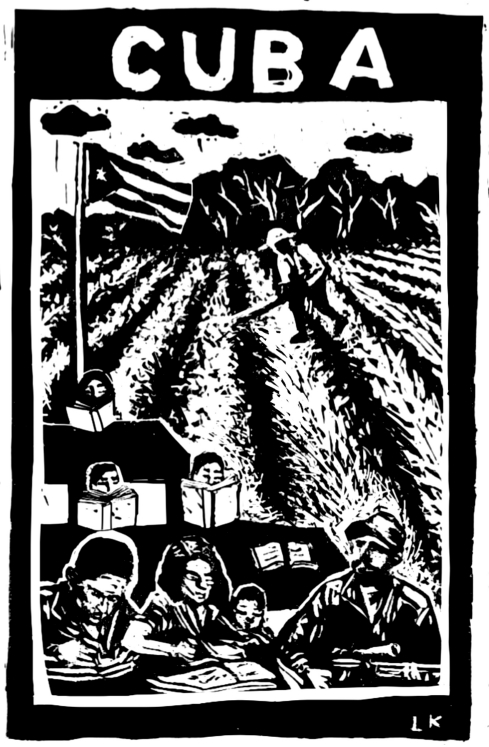
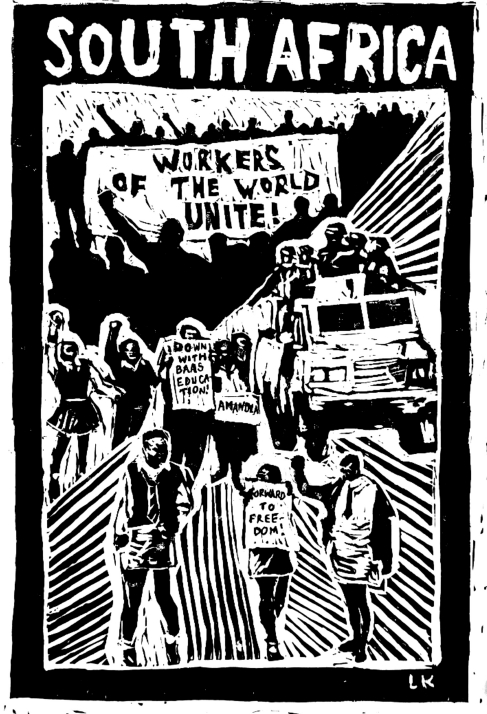
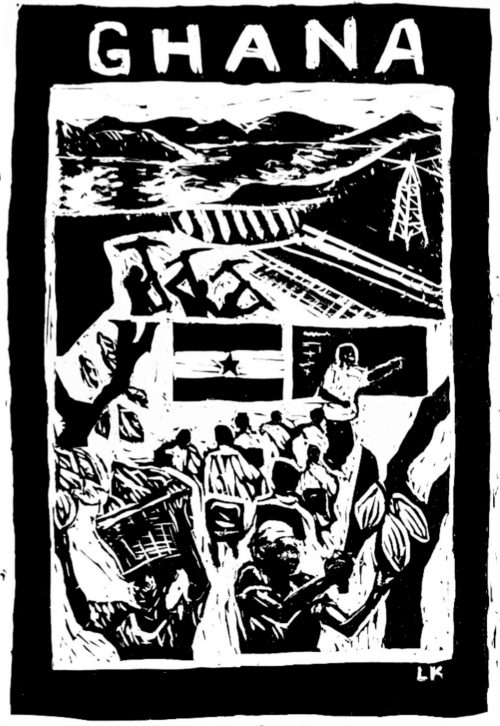
Pathways to Free Education Vol. I
The Probability of a Free Education
By Wilton Schereka – University of the Western Cape
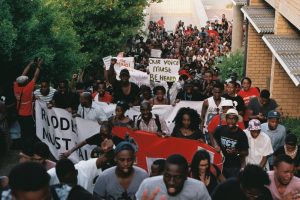
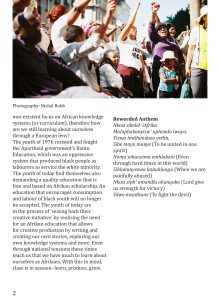
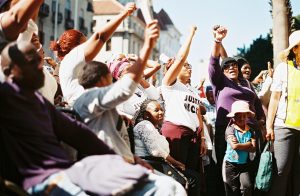
Photography by Nishaal Robb
That populist politics has taken a hold of the narrative around free public services, such as education, is self evident in the South African context. Each of the top three political parties, in its own way, expounds on ideas of how it will bring this freedom to existence. One political party in particular is even going so far as to promise sweeping land reform policies. I remain sceptical of these types of promises for a few reasons. One of those is the sheer mass of administration it would take to assess and work through claims. How far back does one go in redressing these issues?
On education, though, it must be noted that the possibility of a free and accessible education is possible. Governmental expenditure fails to make a dent in our budget. Alongside that is the nature of rampant corruption, with suspended teachers who are still getting paid for no work, principals who are still there beyond retirement age, and many other instances of mismanagement. There is also the strange event of budgetary expenses coming in way below what was made available, even though the situation is dire in places like the Eastern Cape.
With all that said, the narrative around free education has mostly been centred around the university. I am not suggesting that we should not be having that conversation, what I am suggesting, as a friend of mine Tarryn De Kock keeps arguing, is that the conversation should first be about primary and secondary education. At university level, it is my firm belief that with a combination of more government expenditure and the French model, where well-off students pay more than poor students, it is plausible then that tertiary education could become more accessible. Of course, the population of well-off students will be upset with this, but to them I posit the notion of addressing your privilege. One only has to look so far as the UCT parking bays to note the sheer amount of privilege at play at some of these institutions. But, and I must stress this: all of this is futile without a functioning and financially liberated primary and secondary school system.
From reflections to action from #PatriarchyMustFall
By Naledi Mbaba
When we first started having these conversations around #Feesmustfall it was quite obvious that it was about more than fees, it was about creating a more comfortable and inclusive varsity experience for the black child. #Feesmustfall was a demand to have more accessible learning spaces for black people, queer people, trans people and black women and the best way to go about this would be to do away with fees. However, there have been some very important questions and concerns raised around how we ought to go about funding fees. The money the government gives tertiary institutions is already not enough and our universities are heavily underfunded by the state hence the ridiculously high fees. Universities have been able to find alternative ways to make up for the government’s shortfall by encouraging alumni and other donations, but clearly even that is not enough, because so many of us still cannot afford to pay the already subsidised fees. There’s no denying that finding money to fund university fees will not be easy, but it is still very possible. When looking for viable ways to fund the falling of fees we need to consider who has always had access to these spaces of learning, and from what we can see today, it has always been white men – with the more recent inclusion of white women. For decades white people have been able to afford to pay these high fees, because the history of this country allowed them to be in financially better positions at the expense of black people. Allowing black people to co-exist in the same universities as white people did not change that and it is the black students who need fees to fall the most. This means that taxing the historically advantaged would be the best and fairest way to go about funding tertiary education. This would mean that all white graduates would get taxed for benefitting from a system that was built on the back of black people. This money would then go into funding tertiary education. We know that fees will not fall overnight, but hopefully years of taxing white graduates and the white middle to upper class will be enough to make up for the government’s short fall. A question of leadership will always arise once we start talking protests and it is indeed a valid one. It has now become knowledge that male led movements have a tendency to oppress and make the lives of the people they are leading difficult. They do this by allowing men to be violent and allow rape culture to divide the people. A way to combat the oppression of women, queer and trans people by the men of the movement would be to have them lead the movement. This way spaces and environment that make them feel safer will be created and the chances of internal conflict and oppression will be mitigated. This is very important if we are serious about having successful protest action. A movement where people do not have to compromise parts of themselves is a movement that is most likely to reach its final goal with the least casualties. This is where voices like #PatriarchyMustFall come in.
[AUDIO] Interview with Nazeema Samuels (NUMSA Shop Steward) on struggle for Free Education
Nombuso Mathibela with Nozizwe Beya
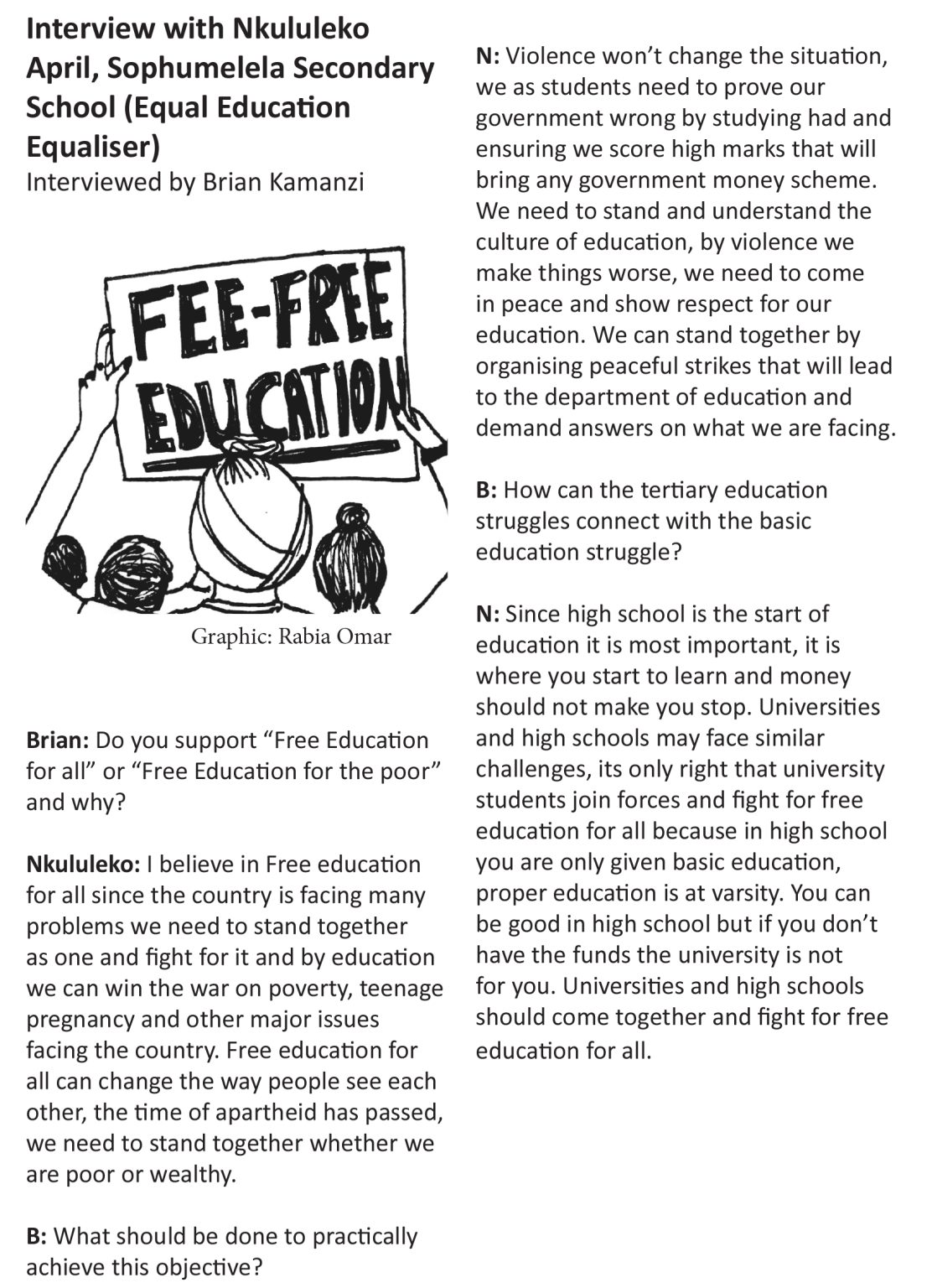
University of Cape Town law student Nombuso Mathibela spoke with former NEHAWU shop steward, Nozizwe Beya, about Free Education
-Transcription by Sakhi Dlala
Nombuso: Singayifumana njani imfundoyasimahla, ngoobani ekumele bayihlawule-le, futhi bazakuyihlawula njani, ukusukelakwizikolo ezisezantsi ukuyotsho edyuni-vesithi?
Nozi: Ngokwam ukubona, kaloku urhu-lumente, nguye ekumele adlale indima ebal-ulekilelyo, ngoba ikwanguye owasithembisangemfundo yasimahla, kufuneka ayenze lon-to yenzeke bangapheleli ekuthetheni qha.Kwaye nabantu abaneemali zabo abanok-wazi ukuncedisa, nathi singabazali ukubaikhona into ethi masikhuphe imali ingephisiyazi ukuba ikhona ingxowa esiyaziyo ukubaisuka kubazali, umzekelo apha edyunivesithisiyazi indima eniyenzile, ukuba bekusithiwaabazali banayo indima ethile ekuncidisenikwingxowa mali yebafundi. Ikakhulu kekumele ibengaba bantu banemali, uqalaphezulu. La-tax urhulumente ayikhuphayo, iyaphi? Mayike iyeke ubheka eNkandla, mayize nga-pha yenze lento yabantwana besikolongobauba bathi imfundo ibalulekile, mayibalulekebebonakalisa ukuba bayafaka kwingxowamali yemfundo singurhulumente, kun-gamane kusithiwa imfundo ibalulekile,ibaluleka njani imfundo abantwana ben-genamali? Thina singabazali sibe singakwaziukubabhatalela, imali ibe ikhona pha kuboiyile yenza into esingayaziyongoko ke urhu-lumente kufuneka abe ngowokuqala ukubaahlenga-hlengise iimali zakhe. I-tax yakhemakayijonge uba ibheka ngaphi na, i-taxkumele iya kwiimfundo.
Nombuso: Uthini ngabahlohli (lecturers) abarhola imali eninzi apha e-UCT?
Nozi: Ngabo ebekumela ukuba bafaka imaliengxoweni, wonke umntu, nongaphandleapha kwi-UCT, naba baqhayisa ngoba ba-phuma apha e-UCT mabeze bazogalela imaliapha engxoweni, njengalamfo kwi Media24wayeke wasibiza phaya, wathi ulinde ubaezizinto mazenzeke naye makenze, masi-bone ingxowa yakhe isiza, makaze nengx-owa yakhe sibone esithi ‘nam ndiyafakanaku’ kwaye man akunobakho bunzimaxa sinoqala apha ngaphakathi kubaseben-zi kubekho ingxowa yabasebenzi, ngobakaloku abasebenzi, u ‘enkosi’ wabo uphi.Bathe abanye apha kum, banako ukuncedisaabantwana besikolo xa kunobakho into ethimasincedise ngemali, xa lifikile ke elothu-ba kuzomele bancedise apha abantwanabesikolo kuba abantwana kumele benemaliyesikolo. , ngoko ke ndiyakhuthaza nabazalibancedise, ewe ndiyayazi ukuba incinci imaliyile sisayifunayo kodwa andithethi umrho-lo wonke, losenti siyifakayo izakuncedisakuloomali ifakwe ngaba bazizityebi bazofakakangangoko sinako.
Nombuso: Uyayiqonda ukuba ukufikakweemfundo yasimahla asizokuyifumanakwangoku, sizakuthabatha amanyathelongaamnyathelo ukuze sifikelele kuyo, kukhoabathi abafundi abahlwempuzeke kakhulubayifumane kuqala, ize igqibele ngabanyeabakwaziyo ukuzihlawulela apha e-UCT,kodwa kumele iqale kwabo bangakwaziyoukuzihlawulela, uyavumelana nalonto?
Nozi: Ewe ndiyavuma ngoba kaloku thinasingabanye abazali, abantwana bethu abak-wazi ukuza edyunivesithi ngoba jkaloku asik-wazi ukubhatala, abanye bethu abafumaninalo NSFAS na kakade, ufumanise ukubakufuneka uncame le yakho isenti umbha-talele ngayo umntwana, axhomekeke ngayoyonke into, ngok ke kumele iqale pha phan-tsi, ezazithembiso urhulumente wayetheuzakuzenza zonke izinto kufuneka baqaleapha kuthi, ngoba bayayazi ukuba bakhonaabantu abahluphekayo, bangabukeli intoyoba ibengabo abaxhamlayo, silibaleke.Urhulumente makaqale ngaba bethuabantwana, hayi abezityebi abaphezuluabahleli benayo imali, naba abantwanabegcwele ezitalatweni ngoba asinayoimali, kanti uba ebenokhangela aqokeleleaba bantwana baphandle ngoba bakho-na abantwana abahlala phandle ngobabengakwazi ukuhlawulela imfundo, aku-ba abafuni ukufuna, abakwazi ufundabengenamali yeemfunoo, ngoko ke lontoyokuqokelela abantwana basiwe kwi-shel-ters ethile kodwa banganikwa mfundo kuloshelter, mabayoqokelelwa kwezo-shelterkuthiwe nasi isikolo, sizakunihlawulela, imalimayiqale apha, kwababantwana baphantsi,nokuba izovela kubani na, mayiqale kubantuabahluphekileyo.
Nombuso: Ucinga ntoni na nge NSFAS
Nozi: Kuba ndingayzai ivelaphi, ivelaphikuqala, isuka kurhulumente, isuka….Nombuso..isuka kurhulumente kodwa ay-incedi wonke umntu
Nozi: inceda bani otheni, kufuneke ubeu-qualifya kwinto ethile uzube uyayifuma-na?
Nombuso: Ewe
Nozi: Yile nto kengoku, ndithi bethu abant-wana bethu abanga qualifayiyo kwezi zintozifunwayo, lonto ithetha ukuba abakazuyifu-mana imfundo, yile nto ndithi kuemele aqa-le kwaba bantwana, ababonele ukuba noku-ba umntwana wam akafikanga edyunivesithikodwa akhuphe imali, iqale kulamntwana ohluphekileyo nokuba umntwana uqaleekholejini amkhuphele imali, siyibone nyaniuba uyakhathal urhulumente ngabantwana,bagcwele abantwana apha phandle, abanyebahleli nje bepase oo-10kodwa abakwaziukuya ndawo ngoba urhulumente uthi vukauzenzele, ndizovuka ndenze ngantoni, ngo-ba ndifuna uya esikolwni, andinayo imali,umzali akanayo imali, ndizovuka ndenzengantoni? Ngoba nokuba ndingathengisaamagwinya nam izakuthatha ixesha intoyokuba lomntwana ayofikelela kulandawoafuna ukuya kuyo, ngoko ke imali ezobe-kwa, kuthiwe: ‘lengxowa yeya bantwana’ngoba zininzi iingxowa apha eSouth Africa,kukho nezizinto kukho nezi zinto oMandelanton’ nton’, kukho iingxowa ezihleliyo apha,ooGwede Mantashe banezabo, zenza ntoniphi? Ngabantu abahleli phaya ePalamenteabatyebileyo, mzehle ezamali zize aphaezansti, singaqhayiselwa ngombane, nabobafundiswa ngabazali babo.
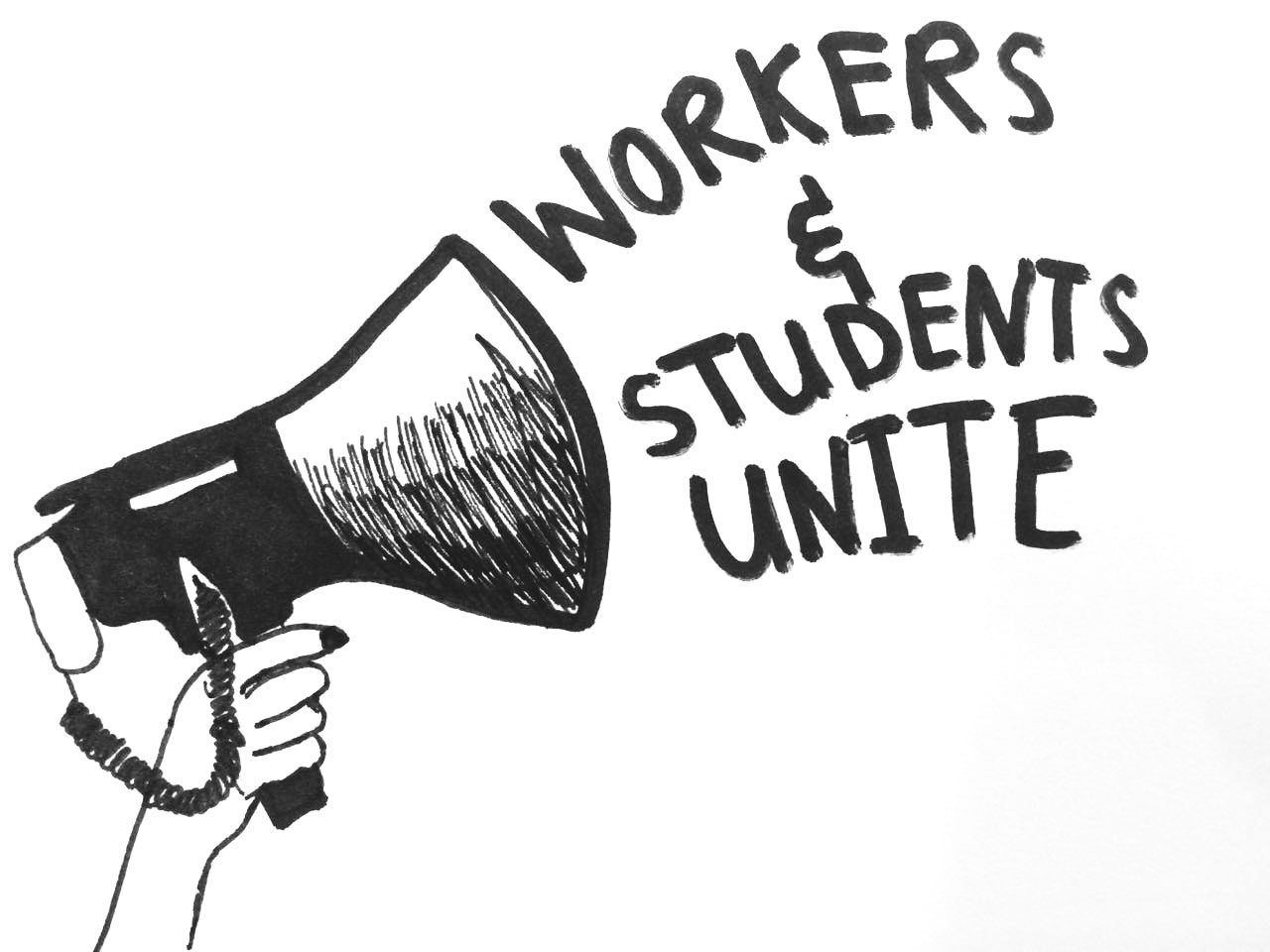
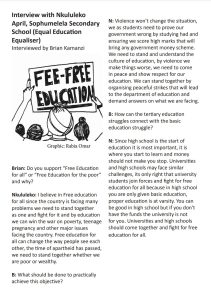
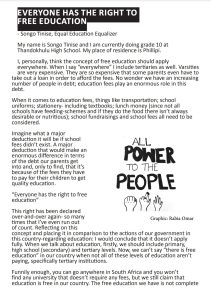
▴ Graphic by Rabia Omar.
Pathways to Free Education Vol. II
...Volume II: Strategies and Tactics was then published in October 2016. The pieces in this volume range from the role of media in movements, guides to self-care for naked protest, reflections on hunger-strike, and occupation as methods, to cartoons on organizing community education sessions, as well as tips on chairing meetings.
Histories of experiments in educational and cultural projects from various parts of the world — with a particular bias toward the African continent and the Global South — have been part of a concerted attempt to broaden our political imaginations beyond the current moment in Cape Town. Volumes I & II featured pieces on education politics in Ethiopia, Ghana and Brazil, in addition to contributions from local organizations in the form of poems, interviews and essays. This sensibility has been central to Pathways: understanding that any radical pan-Africanist project will, by necessity, start with us learning about other parts of the continent.
”Pathways to Free Education Vol. II – Contents
1 Nkosi sikelel’ iAfrika – Sethembile Msezane
3 Understandings the basics of the United Front Strategy – Dinga Sikwebu with Brian Kamanzi
7 The Role of Popular Education in Movement Building – Asher Gamedze & Julie Nxadi
9 How to write a memorandum – Thabang Bhili
10 Chairing Meetings/Plenaries – Rouen Thebus
12 Lessons on organising with High Schools – Noncedo Madubedube & Nishal Kotecha Robb with Nyiko Maroleni
14 Comments on engaging with communities – In dialogue with Ihsaan Bassier
16 Lessons on community organizing – Ebraheim Fourie in dialogue with Kalila Hercules
19 Community and struggles and the tactics of land occupations in conversation with Petrus Brink – Simon Rakei
24 On photography in social movements – Zara Julius
26 The role film and documentaries in popular struggle: what you can do to practically get involved – Nadine Cloete with Aaliyah Vayej & Aisha Hamdulay
30 Afrikan Music, Education and Being Together – Ernie Koela and Asher Gamedze
31 Working With Community Media (then and now) – Zubeida Jaffer talks to Brian Kamanzi
33 Policy as rules of the economic game. We are the players – Kamal Kweku Yakubu
34 On the Working Class in Free Education – Faisal Garba
36 Dureyah Abrahams on navigating her disability alongside campus protests – Aisha Hamdulay
38 Pamphleting tactics: Model for ‘Pathways to Free Education’ – Pathways to Free Education
39 Digital campaigning – Koketso Moeti
41 Boycott & Divestment strategies: Case study on US universities with transnational solidarity for South Africa & Palestine – Khadija Khan
43 The protest method of Hunger Strike: In conversation with Jonathan Butler from University of Missourri student protests – Brian Kamanzi
45 Boycott Tactics: Case study on 1957 Alexandria Bus Boycott – Chwaita Wenana Mamqhinebe Mamkhomazi
46 A perspective from the high school occupations in Brazil – Cassia Quezia
47 Building Genuine and Robust International Solidarity Networks – Raymond Sango
49 Lessons for #FeesMustFall from Ethiopia’s #OromoRevolution and the quest for self-determination and land – Hibist Kaasa
51 Caught in a Protest? Here’s what to do! – Nombuso Mathibela & R2K
53 Protest Gatherings and the Police – Rouen Thebus
54 4 Tips for Working with Media during #FeesMustFall – Mishka Wazaar
55 Black Politics: the Body in Protest. A Program of Selfcare for Naked Action – Michelle Mattiuzzi
56 How to organise medical support during protest – Princess Ndlazi
58 On Self-Care and Mental Health – Lorna Houston
60 In Conversation with Dudu Ndlovu: Useful tips when chairing Plenaries/Meetings – Rouen Thebus
62 Community Radio Stations’ Contact Details – Brian Kamanzi
64 Organisations’ Contact Details – Ruach Slayen & Rouen Thebus
Nkosi sikelel’ iAfrika
by Sethembile Msezane
Nkosi sikelel’ iAfrika, these words seem so simple and familiar yet hold a powerful message- God bless Afrika. Sung in a number of national anthems in the continent, this not only a religious call but an awakening of Afrikans in Afrika. Ngugi Thiong’o states, “It is an ever continuing struggle [for Africans] to seize back their creative initiative in history through a real control of all the means of communal self-definition in time and space.”
As the youth of South Africa we find ourselves at the crossroads of being the ideal of the post-apartheid, born free, rainbow nation and realising that this is a dream deferred. We find ourselves questioning the symbols that represent not only apartheid or colonial histories such as the Rhodes statue but also the symbols that reinforce a national identity such as a national anthem. The presence of the arts in our society is thus an influential tool that can implement change or can be misused to enforce oppressive and even silencing power structures. Adapted from Enoch Sontonga’s 1897 composition, Nkosi sikelel’ iAfrika became part of the national anthem in 1994 with the ideal of a ‘New South Africa’. Rethinking the anthem, the youth at the university of Witwatersrand have reworded some of Enoch Sontonga’s version of the anthem to speak to the difficulty of the times we find ourselves in currently. The youth question how much has really changed for black people if we are to claim the ideal of the ‘New South Africa’. The limited opportunities for black youth without a tertiary education, the economic and structural difficulties of getting a degree and further securing a job thereafter has called for us to revisit the function of education in our country. Collectively through protest, songs, banners and other creative means, we are able to have accessible national conversations about the shift in awareness in our landscape. Education sits at the center of this awareness, as it is a means to defining self in relation to the society around us. It is in institutions of higher education where South African students have experienced a limited or non-existent focus on African knowledge systems (or curriculum), therefore how are we still learning about ourselves through a European lens? The youth of 1976 resisted and fought the Apartheid government’s Bantu Education, which was an oppressive system that produced black people as labourers to service the white minority. The youth of today find themselves also demanding a quality education that is free and based on Afrikan scholarship. An education that encourages consumption and labour of black youth will no longer be accepted. The youth of today are in the process of ‘seizing back their creative initiative’ by realising the need for an Afrikan education that allows for creative production by writing and creating our own stories, exploring our own knowledge systems and more. Even through national tensions these times teach us that we have much to learn about ourselves as Afrikans. With this in mind, class is in session- learn, produce, grow.
Reworded Anthem
Nkosi sikelel’ iAfrika
Maluphakanyisw’ uphondo lwayo,
Yizwa imithandazo yethu,
Sibe moya munye (To be united in one
spirit)
Noma sekunzima emhlabeni (Even
through hard times in this world)
Sihlukunyezwa kabuhlungu (When we are
painfully abused)
Nkosi siph’ amandla okunqoba (Lord give
us strength for victory)
Silwe nosathane (To fight the devil)
How to write a memorandum
By Thabang Bhili
Naturally, Douglass writes that “Power concedes nothing without a demand. It never has and it never will”. The main purpose of a memorandum is to communicate and present those demands to those in positions of authority with the capacity to meet and realize them.
There are minimum requirements that are needed for a memorandum to be formally presented. We should aim to stick to these requirements even under those special conditions.
1. Title
The title appears at the top of the document and its main purpose is to capture a concise theme of not more than two sentences that directly addresses either an abstract demand or purpose of the protest including a date, for example;
Memorandum to Chamber of Commerce – 22 October 2016 or FeesMustFall and EndOutsorcing – 22/10/2016 or ‘’Great March for Economic Freedom – 23-08-2014’’.
More interestingly was the one I saw titled ‘’we demand everything’’.
2. Who are you and why are you protesting?
This section contains a short explanation and details about the name of your organization, movement or demonstration including what is it really about and trying to achieve and advance in that particular context. It should also specify why that institution is being presented with those demands i.e. why it is responsible; clearly identifying the role that the institution has played in creation of the problem and the capacity that it has in solving that problem(s).
3. List demands
This section is the most important of all and takes up most of the memorandum because it contains the actual demands. The demands can be grouped together according to similarity or they can be numbered and written in sentence form and sometimes in paragraph form with more details and precise instructions.
4. Timelines and commitment
The institutions should either be given timelines upon which they are required to realize those demands or they should be asked to act with the necessary urgency to show commitment and respect for those who are protesting. This section can also include guidelines on how should the institutions show commitment and seriousness to realize those demands.
Understandings the basics of the United Front Strategy with Dinga Sikwebu
Interview by Brian Kamanzi
Transcribed by Maria Nanabhai
Brian Kamanzi: Thanks for agreeing to meet with me. I’d just like to start us off by talking through what is your understanding of the united front as a progressive strategy?
Dinga Sikwebu: Firstly, the idea of a united front has a long history within progressive organisations. There are differences in dating the genesis of the united front strategy, so I’m not going to get into that. The united front is a strategy that has been used in contexts where there is a realisation that sections of the progressive movement may be marching under different banners for different reasons. Other components of the progressive movement may think that one section is reformist and strategic estimations may also not be the same.
Secondly, organisations and movements adopt a united front strategy when they realise that to maximise impact of the progressive bloc, it is vital that they join forces. When they join forces, they do so under quite clear understanding, and that understanding is that:
- Each of the organisations continue to be independent.
- Secondly, that the purpose of coming together is to inflict damage on the other side, or what is called the enemy camp, and therefore the united front is action-driven.
- Thirdly, underlying the strategy is an understanding that differences get validated or invalidated in the process of struggle. In the final analysis, it’s praxis that will determine who’s right and who’s wrong.
BK: How relevant is the united front strategy for today’s student struggles and movements?
DS: The first thing to note is that the united front is not reducible to a formal organisation. It’s not equal to an organisation. The united front is primarily an approach to struggle. It’s important to distinguish between the united front as an approach to struggles or campaigns, and what may be a formal united front organisation. And the organisational form is always, to me, secondary.
Talking concretely about the current student movement, I think there is the necessity of a united front – as a strategy and an approach to struggle – between student organisations that fall under the banner of the Progressive Youth Alliance (PYA) and student movements that fall outside of this alliance.
There may be component of the student movement that feel that the PYA is just a buffer between the state and the students. But an organisation like SASCO has, I think, a constituency and this may vary from campus to campus. Therefore under these conditions a united front that involves different student compartments is vital.
The second lesson for me is that you can’t say, “Oh I want to unite you with you, minus your leaders.” You can’t say, “Your leaders are rotten so let’s act together, but minus your leaders.” People have elected those leaders or believe in those leaders, so you have to understand that at the level of consciousness of the people who are in those organisations, they think that those are the best leaders at the moment. And somehow you need to live with that.
BK: But how will the united front strategy work when there are big differences between different components of the student movement?
DS: When I was growing up, there was a question of: in the united front do you maintain your right to criticise? Over the years, I’ve come to a conclusion that what was missing in the insistence on the right to criticise was how the criticism was conducted. The Eurocentric styles within the Marxist tradition of polemicising everything and poking one in the eye can sometimes be destructive. We may have differences as comrades, but we must not forget that we’re still on same side. The comrades I disagree with are not part of the enemy camp, and therefore how I criticise them must not make them feel small. Equally, my political alignment must not be raised each time I come to a meeting. If this happens, then obviously I’m not going to be comfortable with that.
Just being more concrete, if SASCO is aligned to the ANC, then that is their decision. We may have a view on that, or question what motivates people to do that. But the fact is that they’ve decided on that approach. What is important for a united front strategy is not their political alignment but their stance on fee increases and free education; their preparedness or unpreparedness to fight for free education. I’m not too sure about the value of saying, “but look you have alliances with the ruling party…” whenever they come into the room. Lambasting them for their political alignment is just going to drive them away. Insofar as their alignment may then undermine the campaign and the struggle that’s unfolding, it is legitimate to raise questions. But to keep on questioning their bona fides is not helpful. Sometimes the vitriol that I find – instead of bringing people together, just pushes comrades apart.
We need to learn how to have what I call a comradely disagreement. Comradely disagreement is different from disagreement which releases vitriol and where the strategic objective gets lost. Handling differences in ways that lead to fragmentation undermines the basis on which we can clarify the very perspectives which we disagree on. I think we should handle our differences in a way that does not distract us from the idea of fighting together to win. If you win, however temporary the victory may be, there is a possibility of looking down the mountain after victories are won, and say, “Look, we disagreed on this but we are here now, maybe that wasn’t a significant difference.”
BK: When we say there is a right to criticise within the united front strategy, where is the space where the components all come together?
DS: The first thing is that there must be an agreement on a minimum programme. All the components must agree to this programme and that programme would include commitment to fight for free education, definition of what we mean by free education, whatever it is; as well as agreeing on the methods of struggle. This is the minimum programme. There are lots of other areas where people don’t agree. There may also be other methods which other people don’t accept. Within this agreed framework, then you can say, “But comrades, you are veering off from the minimum programme.” It is crucial to remember that those who embark on a united front strategy have all other big issues which they don’t agree with, which we are not suspending, but are not part of the minimum programme.
So I think sometimes what happens is that those areas of no agreement get put up all the time and this causes the mixing up of “maximum programmes” of the different constituent parts, with what’s in the minimum programme. So the important thing for a united front strategy is to agree on a minimum programme. What brings us together? What are the methods of struggle? How do we conduct ourselves? And there may be an agreement of how, structurally, we would deal with when people are veering off what is initially agreed. There is also nothing that stops expanding areas of agreement as we feel each other and in the course of struggle. The minimum programme is not fixed. It’s just that at some point you have to agree on what is common as a basis of waging the fight and campaign.
BK: In the history of struggle in this country, are there any examples of successful united strategies?
DS: One must be honest, that in South Africa, there have been few successful united fronts, organisationally speaking.
There are two instructive examples of united fronts, just within our recent past in South Africa. In 1983 two fronts were formed. The one was the National Forum (NF), which was the Black Consciousness-inspired united front. And then the United Democratic Front (UDF) gets formed in August 1983.
If you look at the two, the NF required commitment to anti-capitalism and the UDF had a very minimalist approach to programme. The basis of the UDF formally was opposition to the introduction of a Tri-cameral Parliament, and to the new influx control measure which was called the Orderly Movement and Settlement of Black Persons Bill. Although mainly sympathetic to the ANC, the UDF did not make membership to the front conditional on acceptance of the Freedom Charter. The UDF only adopts the Freedom Charter in 1987. Until then, there was an understanding that if you insisted on the Freedom Charter, this will have excluded other people. There also may have been an understanding of the need to accommodate more liberal and moderate layers in society.
A lot can be learnt from these two examples. Firstly, the masses have the ability to transform organisations regardless of the intentions of those who formed them. Secondly, organising around concrete issues is the best way that ordinary people come into struggle. With its lofty anti-capitalist principles the NF never went anywhere. Having been started maybe to accommodate liberal organisations, as soon as the UDF got to the townships and as soon as ordinary people it took over it was a different ballgame. It became the mobilisation tool of the 1980s.
It is also important that we look at some of the liberation movements like FRELIMO. FRELIMO was a front, before because of the support from Soviet Union it turned itself into a Marxist-Leninist vanguard party. The idea of a front, more than the traditional political instrument, like a party, is may be more appropriate for contexts in Africa where the making of colonialism led to unevenness and different experiences.
BK: I think the minimum programme concept is useful for this. How do those involved in a united front strategy make decisions? How do they aggregate group choice? Do they call meetings where they have an assembly of sorts? Do they vote? Do the organisations sit in a congress? When we say they have a right to criticise, where is the space where they all come together?
DS: The idea of a minimum programme requires a movement through consensus. The idea is that decisions are best reached through consensus. We bracket areas for further discussion; which is not an easy thing. Language is important. You may opt to call areas of disagreement, areas for further discussions; signalling that there is an intention to converge. This may be frustrating but I think it is the only method to build something sustainable; moving on areas where there is convergence while bracketing areas for further discussion. If you take the idea of the minimum programme, it may look crippling, but you build on the basis of agreements.
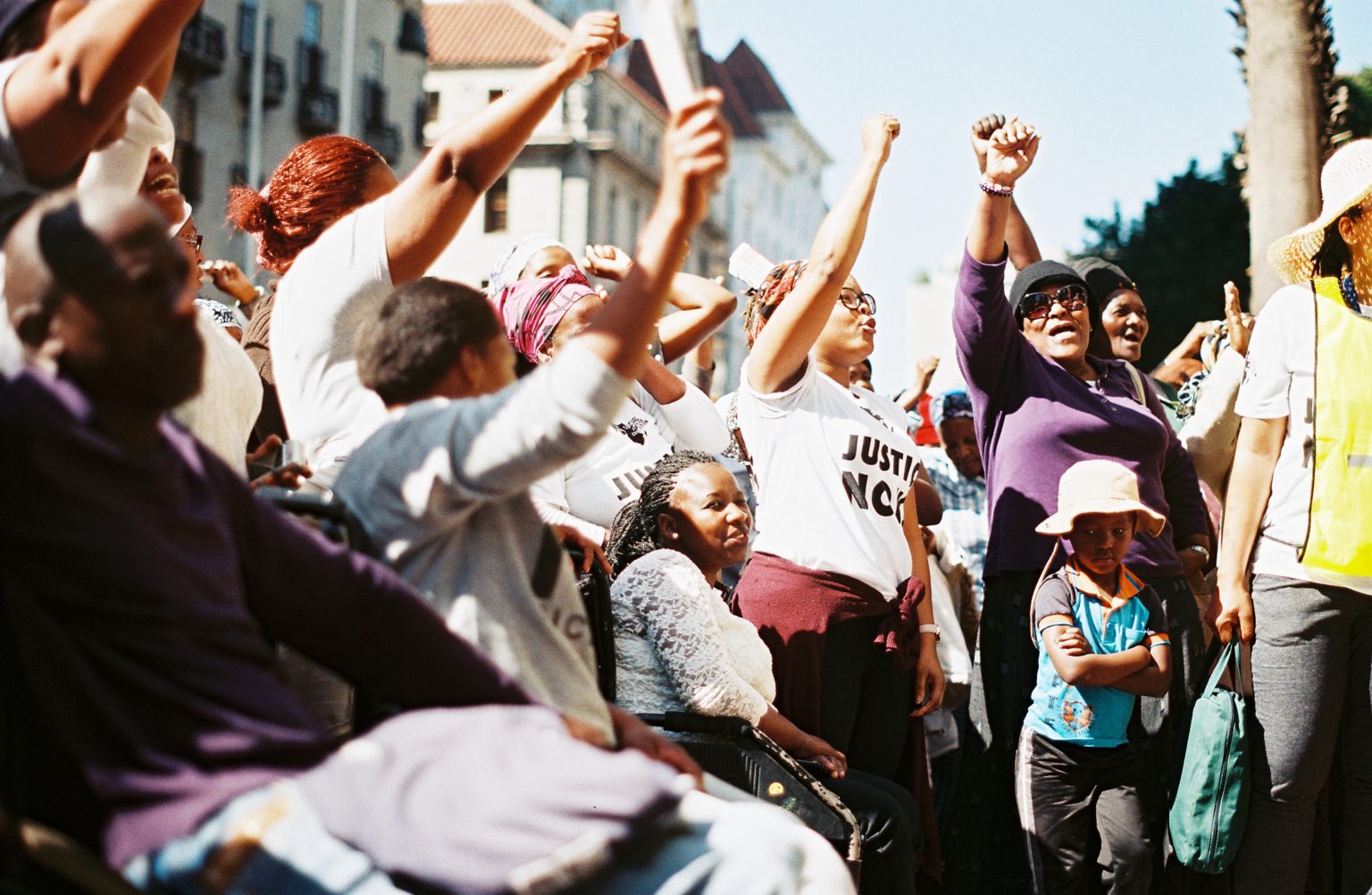
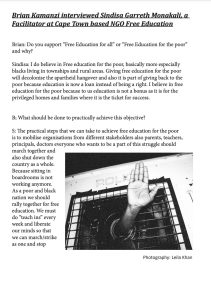
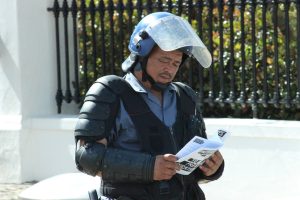
▴ Photography by Nishal Robb
Pathways to Free Education Vol. III
Histories of experiments in educational and cultural projects from various parts of the world — with a particular bias toward the African continent and the Global South — have been part of a concerted attempt to broaden our political imaginations beyond the current moment in Cape Town. Volumes I & II featured pieces on education politics in Ethiopia, Ghana and Brazil, in addition to contributions from local organizations in the form of poems, interviews and essays. This sensibility has been central to Pathways: understanding that any radical pan-Africanist project will, by necessity, start with us learning about other parts of the continent.
This “reaching out” was extended in Volume III: Third World Education and Social Welfare Programmes, which was published in August 2017. The third volume contains chapters on Tanzania, Ghana, South Africa, Zimbabwe, Brazil, Cuba, the U.S., and Puerto Rico. Many of the contributors come from and/or live in the contexts about which they were writing. The chapters vary in form and content: looking at legacies of past organizing and radical social programs, interviews with people involved in historical and contemporary struggles, as well as responses to other authors’ essays. This booklet has been put together explicitly for the purposes of facilitating discussions, reading groups and the hosting of independent popular education spaces. This opens up to some of the dynamics and processes and relationships and workshops that have been created around the publications, which we understand as part of “publication” broadly.
”Pathways to Free Education Vol.III – Contents
Contents
On process
On printmaking as Protest – Leila Khan
Tanzania
A Reflection on Education for Self Reliance – Azimio la Elimu
Critical Reflections of Ujamaa’s Education for Self Reliance
Ghana
On the Historical Development of Public Education in Ghana
Reflections and Discussion points on the Historical Development of
Education in Ghana
Education Struggles in Ghana: Reflections on the past, Visions for tomorrow
South Africa
Radical Educational Histories i: SACHED and some others
Clements Kadalie, the ICU and the Black Labour Movement
Women in Trade Unions and Popular Education Challenges
Zimbabwe
Perspectives on Agrarian reform and education in Zimbabwe
Perspectives on Agrarian reform and education in Zimbabwe
Lessons from Treading Unforgotten and Familiar Paths
Brazil
Bolsa Família and the rise up and down of Brazilian social policies
Reflections on Dr Butteli’s discussion on Bolsa Família and Unpacking Social Grant
schemes with Natasha Vally
Challenging Brazil’s so called “racial democracy” with Brunata Mires
Cuba
A critical reflection on Education, Land reform and Nutrition in Cuba
Responses to Education, Land and Nutrition in Cuba
Reflections on emancipatory education from Cuba, Bolivia and South Africa
U.S.A & Puerto Rico
Radical education as the Black Panther’s legacy
Seize our right to live, seize our right to survive
Thinking through education and radical politics
Anti-colonialism and Discontents in Freedom Struggle for Puerto Rico
Reflections
Reflections on process
Editor reflection: Brazil chapter
A short note reflecting on the process
[AUDIO] In conversation with Jukwaa La Wajamaa Tanzania – Tanzanian Socialist Forum
Lessons from Treading Unforgotten and Familiar Paths
Reflections on working with the contributors to the Zimbabwe Chapter of this 3rd edition of Pathways to Free Education
By Simon Rakei
Introduction
Perhaps more than any other place on the planet, the African continent is the one most besought with cautionary tales and experiences which invariably have tragic outcomes.
One may question the value or worth of sharing these tales and historic experiences – especially if the processes that led to those outcomes are to some extent necessarily unavoidable within our unfolding times – or even inevitable. Yet, it stands to reason, that the reason we look to examples of similar contexts is not for shallow hopes, empty platitudes of drawing lessons from the past so as to avoid similar trappings, or planning differently, more effectively and better. Instead, it is for the cognisance that beyond everything else; come what may or the best laid plans: there is value in acknowledging those experiences – seeing them as they are, and, in understanding the causes fundamentally.
Our choices thereafter; whether or not they are affected, how, or why, become irrelevant in so far as it relates to simply acknowledging historical realities. And as with any other instance in life, the decisions we make in moving forward given this awareness, are up to each one. Ours, as with this third edition of Pathways to Free Education, is to help open ourselves and others up to that awareness, and to bring to the fore content that may be useful in deciding what the next steps are for the Free Education movement.
You will have noticed from the preceding two essays in this chapter that education is inextricably linked with the social and economic reality of any society, its effects far reaching and unending. In Zimbabwe, after the land reform program, school fees in primary and secondary schools were silently reintroduced. Just towards the end of June this year, 600 Medical Students at the University of Zimbabwe were evicted out of university residences both on and off campus grounds for protesting a 30% increase in fees.1 As calls and support for decolonisation grow louder, these events are not only a bitter pill which serve as a reminder of what potentially awaits, but also give rise to a serious question pondering what is to be done.
This part of the chapter will not attempt to give answers, rather, it is intended to be reflexive in nature: offer a few thoughts, feelings and insights on the preceding two essays, and provide countering ideas to those views espoused therein, particularly as they relate to answering what is to be done. As we think deeper about the ways to tackle the challenges ahead, this piece attempts weighing up what is expedient and urgently needed to remedy pressing harms against ideological approaches; longer term strategic objectives and tangible tactical gains. Therefore, this essay will by and large look at different positions and approaches as they have been challenged, how they evolve or remain unchanged over time and if the related points of contestation can be resolved or reconciled.
There are three central themes which form the basis of this contestation and are the subject of reflections:
- Underutilisation of Land, Commercialisation and Food Security
- Sacrificing Education for Land
- Sustaining Agricultural Teaching Institutions and the Role of Institutions of Learning
Underutilisation of Land, Commercialisation and Food Security
At the heart of the fast tracked land reform program in Zimbabwe was the problem of commercial farmers dominating the food production sphere, and in a standard economic sense this resulted in barriers to entry for primarily subsistence farmers who had no strict interest in commercial farming and simply wanted to produce food for livelihood. Concerns in Zimbabwe continue to grow about how the land is being underutilised. Increasingly popular solutions are geared towards encouraging an entrepreneurial mind-set amongst farmers, and reintroducing commercial agriculture for its apparent benefits: prior to the land reform the agricultural sector was considered to be a critical constituent in the backbone of the Zimbabwean economy, responsible for jobs and food security. There therefore remains potential for the agricultural sector to be a source for job creation and food security, to ensure people do not go hungry. To this extent various programs at university faculties in Zimbabwe are already offering entrepreneurial courses, and agricultural training colleges and facilities are following suit.
The issue
The central point of contention is whether it is sensible to reintroduce a policy whose harms are intrinsic – that is to say commercial farming by definition will result in larger farming interests, whose existence will necessarily consume small scale farmers because it is cheaper and more economically efficient – and it is the same harms which were driving the need to have a land reform program in the first place. More than that, whether or not these harms can possibly be avoided in so far as it relates to ensuring that the commercialisation will be advantageous to the majority of the indigenous people.
Whilst one could argue that commercial farming before land reform in 2000 was predominantly skewed along racial lines with whites owning the majority of the land, today in Zimbabwe this will only be skewed along class lines, the burgeoning middle class elite and those with connections to the political elite. Such are the trappings of neo-colonialism and it would be folly to make a nationalist argument devoid of meaningful structural change. Commercialisation therefore by its nature will favour those already at the top of the pecking order with resources to upscale and grow quickly. This will automatically exclude poor farmers.
Contending Ideas
The first argument as alluded to in the introductory paragraph of this section is that the agricultural sphere needs to be utilised to the extent of its capacity to help eliminate hunger and create jobs. Part of that means upscaling the existing farms and the vehicle for that is to commercialise. Furthermore, one could also argue that with good regulatory laws and bodies the harms which would exclude poor farmers can be mitigated, and, also ensure that the produce is used for the direct benefit of the people.
This argument’s main weakest points however, are: one, assuming that commercial agriculture is perhaps the only, if not the most effective vehicle for upscaling or ensuring that land is not underutilised. Secondly, it also relies on government administration which is prone to bureaucracy, risking ineffectiveness and corruption as often these channels and individuals therein are not directly involved or simply have no vested interest in the process.
On the other hand, in a dense rural population like Zimbabwe whose farming traditions span decades and still form the basis for living particularly in rural areas, there is a strong argument to be made for community-based-farming and the forming of local cooperatives as it relates to the ownership of land. Most rural homesteads in Zimbabwe from Murehwa running to Buhera with some of the most arable land in the country still live on communal land: in most cases neighbouring homesteads are just under 200 meters from preceding ones. It therefore makes sense that these farming communities collectively farm together as a means of upscaling, and move away from traditional or custom based forms of land ownership and how it’s passed down from generation to generation amongst clans. Alongside investments in agriculture this could be a model which doesn’t disadvantage those it seeks to benefit.
Very importantly, in weighing up this issue we must also consider what the role of commercial farming ought to be in relation to food security, especially in a context where growing food industrial companies like Monsanto are patenting the majority of the world’s seed, suing farmers who save seeds or don’t farm using certified seeds – as is with recent cases in Tanzania where local farmers face a 12 year prison sentence for not being able to prove their seeds are not an infringement of Monsanto’s intellectual property.2 Essentially the debate is who should have the power over food production and what farmers can plant. The ramifications are far reaching ranging from diet and nutritional effects to environmental conservation and sustainability.
There is the much simpler argument that food is so necessary in order for you to live it makes no sense commercialising it – as one needs air to live so too one needs to eat, and you shouldn’t have to go hungry because you don’t have money to buy food (or more crudely the money to live).
Food is fundamental to life, and as Thomas Sankara once said, the one that feeds you controls you. Food security is much, much more than ensuring people go to sleep with a full stomach. When this power with the potential to govern all the actions of our lives is not within the ambit or control of the individuals whose lives are affected by it, then the idea of self- determination and self-actualisation, or decolonisation, is a pipe dream.
In addressing these challenges one must assert that we should not be treated as callously as to be rendered unthinking beings to be controlled. Food security is security for your immediate livelihood, socially and economically, and it is preserving a future worth living.
Reconciliation
Only an attempt at reconciling the above ideas; because the author of this piece is clearly biased.
On the one hand, when all the arguably lofty ideas about how food production ought to occur and who should have control or power over that process are said, it all (also arguably) boils down to people simply needing food to eat, and certainly those who exist and live at the margin do not necessarily have the luxury to worry about which big commercial interest is directing their lives. On a question of immediate need I imagine this is a point many would be happy to concede to despite the overarching harms associated with that.
Certainly, only a few have the luxury to be able to look through the ingredients list at the back of products whilst shopping at Shoprite, fewer still can walk amongst Woolworth’s food isles of organic sections with richly labelled pictures of how the food is grown in non-exploitative ‘environmentally sustainable’ ways. So alternatives are limited.
One would therefore suppose, that it simply means that these limiting options should only be accepted as temporary conditions. An argument could be made that these are conditions which we shouldn’t accept, for the status quo does not address the plight of the poor, provide justice to the marginalised or fairness to those looking for a fighting chance at life or simply living. That said, it also means those on the other side of the fence so to speak should still aim to strive towards a better state of being.
To begin with, by highlighting for example the deadly effects of powerful commercial interest over food security, one could move those of us dependent on them to begin thinking of ways to meaningfully self- determine and oppose the hegemonic hold. And crucially, and for the rest of us, it means it is time to begin the work of building alternatives which speak to our aspirations.
Sacrificing Education for Land
Unmistakably from the preceding two essays, one gets a sense that the land reform program was at the expense of education in Zimbabwe. As but a simple example, after the land reform many primary and secondary schools were forced to impose school fees – thereby immediately excluding students who could not afford to pay from basic education.
Similarly, the higher education system reintroduced fees, and multiple training colleges designed to produce output for teaching, nursing and artisan fields all lost their funding as there was decreased investment from government in the higher education sector.
The issue
Frantz Fanon once famously said that, for a colonized people the most essential value, because the most concrete, is first and foremost the land: the land which will bring them bread and, above all, dignity. Land has been at the heart of any liberation struggle on the continent – and to be clear, the word land isn’t strictly limited to agriculture, but encompasses natural and mineral resources which are abundantly found on the continent, and also extends to “key industrial and economic sectors” such as mines banks and a significant bulk of the corporate sector which enjoys enormous power and influence. Education on the other hand is and has not only been integral in driving any liberation movement, but as Paulo Freire once said in the Pedagogy of the Oppressed, education is the means by which the oppressed will liberate themselves.
At the crux of this is an examination of a fundamental relationship between land and education as the two are interdependent ideas for their meaningful realisation. In that sense one cannot be meaningfully achieved without the other. Or, it is either that one precedes the other (in this instance land first then education), but this too would be folly because it limits education to an anachronistic and fixed meaning of learning only in classrooms.
Contending ideas
Whilst it’s easy to throw around phrases like “you cannot eat ideas or your books” or likewise, “there is no oil well or gold mine on this earth that will ever be worth what your mind can contribute”, it seems that as the debate unfolds, it increasingly locks itself in a dichotomy; where the aspiration for land is viewed as a common good for the benefit of the majority, and education is interpreted as individualism – wanting to enrich the self and maximise individual wellbeing and growth at the expense of others. But as we know in fact, especially given the context of African post- colonial trajectories, both land and education are collective aspirations. #FeesMustFall and the resurgence of decolonisation as mostly driven by university students clearly demonstrates this.
Fortunately the contributing writers of the essays in this chapter had very nuanced and well balanced views in their essays so that makes the scope of the reflection on this particular section somewhat easier. Both writers assume a position whereby land and education are not mutually exclusive as targets or goals, and acknowledge that the redistribution of land in Zimbabwe ought to have occurred in a manner which did not negate correlating social goods and services. Ultimately though, what remains unclear is whether the land question necessarily has a prerogative over education.
It’s difficult ascertaining whether or not an overriding interest exists, or rather, using a hierarchy of rights as a framework e.g. the right to education and the right to housing/shelter or the right to food, one cannot definitively assert the value of the competing interests even in a legal sense which isn’t an ideal framework to begin with. But in combination the interests can be balanced out better. For example, many farm workers lost both their housing and ability to send their children to the farm schools as a result of the land grabs, thereby losing both rights to education and housing. This essay does not intend to debate which rights ought to be prioritised, rather by writing this the hope is that space for that conversation is opened up. One of the big questions when it comes to possible funding sources for free education in a country like South Africa, is, that there are prevalent social issues needing immediate attention – from housing to healthcare – so even if the money to fund free education is found (which it can) how does one begin to justify alleviating a ticking bomb in higher education as opposed to the countless service delivery protests? Or perhaps asked differently, whose rights are more important?
Naturally, this debate cannot only occur in a legal and rights based framework as that is inherently limiting, and our understandings of which rights are important are not ideologically neutral. But more than that, the language of human rights and the specific invocation or appeal to a universal construct of what ought to be or how the world is stifles room for meaningful contestation as there is assumed legitimacy in the claim of “human rights” for example.
Nonetheless a meaningful rights-weigh up would locate itself within the context within which those rights are being debated, and determine which of those are historically valued as of greater weight or importance by the people in that locale. In Zimbabwe, land played a foremost component in both the first and second Chimurenga and liberation struggle. Juxtapose that to South Africa whose liberation struggle is largely accredited to the ANC, was centred more towards advancing civil liberties – education being chief among them, and prominently so during the struggle as 1976 was a pivotal point. Therefore as one can see the argument can be made differently depending on context, where in South Africa for example education has historic value or at least in terms of which struggles are popular, that for education was ahead most.
Of course, outside a rights based framework, the idea of using rights or civil liberties as proxies in deciding what many would argue is a liberatory question, can easily be rubbished if you are arguing for decolonisation. The next possible approaches would be those driven by political or ideological convictions.
There’s already a strong case to be made for why these issues must be addressed simultaneously, thus necessarily making arguments for either/or dichotomies (land or education first) pale in comparison; because any cost- benefit analysis would indicate that the socio-economic impact of negating education outweighs the immediate and medium-term gains of land reform, and the long term goals are threatened with a dysfunctional education system. And without the land it’s difficult to meaningfully educate people to understand themselves or “invent their own souls”. Arguably the fact that many of our education institutions remain Eurocentric and of no relevance to the contexts within which they find themselves in is an example of the effects of not addressing the land question.
Unfortunately theory doesn’t often match with praxis, as the Zimbabwe case study shows. After independence Zimbabwe had one of the most aggressive funding schemes in education, its importance was apparent to them and within a decade Zimbabwe had almost universal enrolment at primary education level and abolished related school fees. In another decade they had one of the highest literacy rates on the continent. Why then despite knowing the value of education as critical in nation building was the land reform program carried out to the detriment of it?
The authors in the preceding essays point to political expediency as the most likely accurate explanation. As with many other decisions taken by most governments vested political interests often direct the outcome of events. In which case the best scenario is to ensure the power to make the decisions lies with the people – unlikely, but still possible.
Reconciliation
The fact of the matter is we are in a crisis – one seemingly common to the trajectories of post-colonial states 20 years after independence. As the cracks reveal themselves and if the argument holds that those in power will first and foremost act to preserve it, then the caution to those calling for Free Education would be not to unwittingly let that demand be instrumentalised as a tactic to otherwise maintain political security. This would mean that the struggles have to be linked together, not be viewed in isolation, thereby making it impossible for the state to ignore the social ills and forcing government to respond to the problem in its fullness.
It would mean an insistence that remaining social issues are not overlooked nor sacrificed because they are ‘competing interests’.
Regardless, you may have picked up on this but just as in the previous section of this essay, there’s a slight bias coming through.
Simply, there are many things to fight and seemingly few avenues to follow. From experience, sometimes one of the few things you can do is to just speak, write, engage the world as it is and learn. Whilst it’s not enough on its own, our ability to learn, to teach and educate ourselves, to think for ourselves, is one that must be nourished. The act of creating this pamphlet is one such example of an act of resistance within most of our everyday reach. Education I think is about dispelling ignorance, which when removed people begin understanding the cause of their own suffering and how to end it.
There is no question that the tide of suffering and inequality must be turned, to that effect we must build capacity and organise. To conscientise ourselves and others, prepare for the conditions to bring about change, and build alternatives.
Without this, we risk gaining power with no direction, gullible to manipulation, and acting in narrow self-interest.
It therefore should be obvious that education, and our minds, are our most valuable resource.3
Sustaining Agricultural Teaching Institutions and the Role of Institutions of Learning
Khanyisa Booi’s essay demonstrates the need for sustained agricultural education and this brings into question how sustainability can be maintained. Invariably, the methods are up for contention. Moreover it is no lie that many of us have no interest in agriculture or the hard laborious work of farming, therefore in terms of sustainability there is also a need to educate young people about the importance of agriculture in our livelihoods.
The issue
There are clear and direct possible solutions posited in the essay referenced above. In particular are privatising and commercialising agricultural teaching institutions. As usual, without government funding these institutions are forced to in order to keep their doors open. Secondly, agricultural teaching is currently limited to designated institutions and not broadly included or integrated in the curriculum of the education system at a primary and secondary level. Therefore in attempting to sustain agricultural education the question becomes what role public institutions and schools play.
A few thoughts and ideas
Commercialisation and privatisation have been discussed at length in the first section of this essay. Fees will automatically exclude those who are poor or cannot afford to pay from acquiring agricultural education. Furthermore privatisation makes it inaccessible to most people as admission can be restricted by the owners. To understand the contentious points here you may refer to that section, although I think there easily is agreement pertaining to that education as a bare minimum must be accessible and affordable.
To sustain agricultural education in Zimbabwe, it must be fed into the school system and made mainstream, taught alongside nutritional development.
In so doing, young people are also equipped with tools to tangibly look after themselves on a material level and to meet their material conditions independently. It’s important too that agricultural education be integrated with other disciplines, and there are great examples of technological innovations in the farming sector in Zimbabwe. Agricultural education must not necessarily be made synonymous with back-breaking labour, thus otherwise dissuading interest in it. New technologies and innovative thinking must be used. That said, the necessity of agriculture for food security and ultimately survival must be impressed, and a willingness to do the work necessary cultured.
We need to create a culture where we understand where our food comes from, who makes it, how it is made. This is important to create a food system that can be held accountable, but more so allows for the holistic development and growth of learners. It follows as a natural conclusion that our schools, where our children are educated, play a role in imparting this knowledge.
Conclusion
The intention of this essay was to reflect on the preceding two essays of this chapter and see how different viewpoints and positions have moved or evolved given countering considerations.
Whilst one attempts to be open to change whilst in a process of reflection, one also invariably develops a better understanding and awareness of different positions without necessarily embracing a change in view. This I think is a sufficient outcome. Perhaps more importantly, whilst there is no single way of moving forward, we can at least be guided to some extent, and know where to look for direction.
There were three focal issues at the heart of this reflection, and each had differing points of view and approaches in addressing the points of contention. The room for debate and conversation has been opened as we grapple with the multiple considerations. And we can continue to move forward as we engage ourselves and others critically, openly and honestly, guided by our common aspirations, and a genuine love, selflessness and commitment to good and justice.
Pathways to Free Education Vol. IV
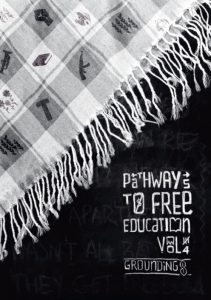
Pathways to Free Education Volume IV: Groundings produced collectively over a period of just over two years through the generous labour of our friends, comrades and loved ones put together works from corners of the world, produced from time stolen in between the demands of life pressures and climates which corroborate to close down opportunities to learn, reflect and think about what is unfolding in front of us.
We invite you to share, circulate, critique and respond to us and what is shared in a manner that grows mutual understanding and takes forward the struggles brought into the fold in transformative ways.
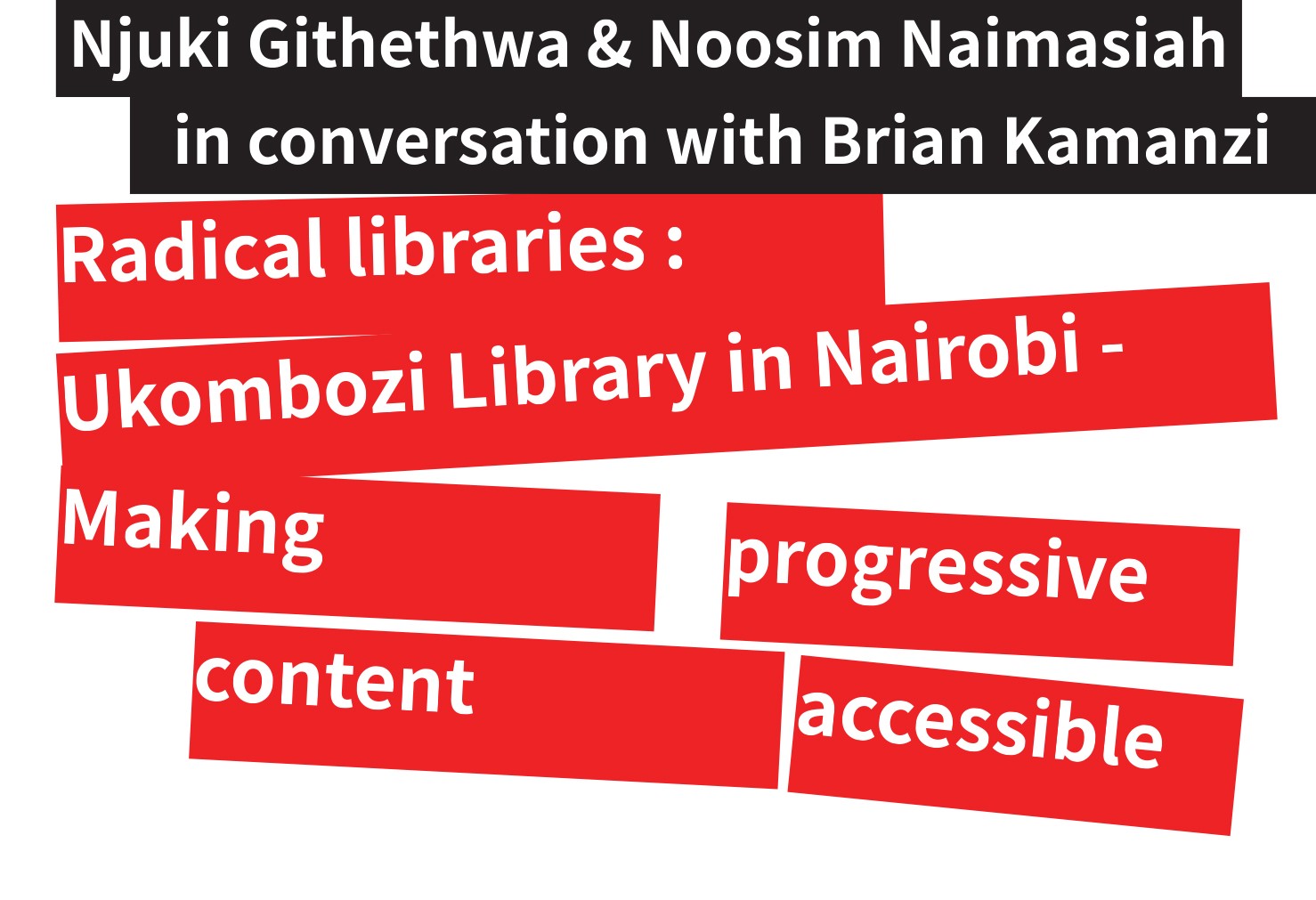
”Radical Libraries:
Ukombozi Library in Nairobi – Making progressive content available
[AUDIO] Njuki Githethwa & Noosim Naimasiah in conversation with Brian Kamanzi.
The Ukombozi Library emerged in partnership with Vita Books & the Mau Mau Research Centre in Nairobi in 2017. The Library aims to make available progressive materials & to encourage reading, study & research by working people in Kenya.
Noosim Naimasiah is a believer in Ujamaa, a communalist and a feminist. She is involved in grassroots organizing within pastoralism and urban communities through Azimio and Ukombozi Library.
Gacheke Gachihi is a veteran community organizer, a Pan-Africanist & Human Rights activist for over 15 years who has been in working as a coordinator of Mathare Social justice center. He is also a committed member of the grassroots social movement Bunge la Mwananchi (the Peoples Parliament).
Njuki Githethwa is a writer, lecturer & activist based in Nairobi. He has engaged for over 15 years in the struggles for human rights & social justice in Kenya & elsewhere in the world. He has participated in the world social forum processes & the Pan African Movement.
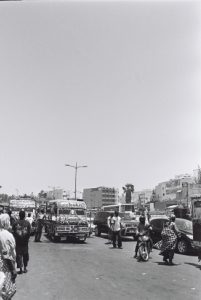
Journey to Dakar
Leila Khan, Nombuso Mathibela & Thuli Gamedze in conversation
Thuli: We’ve been talking about your experience of the Dakar Biennale and it reminded me of the A4 (Arts Foundation) event, when we put pressure on them to reveal their funding because we knew it was linked to Israel and they agreed to a ‘public dialogue’. When they later decided to pull out of this dialogue and not disclose anything, one of the things that their director said in the statement was along the lines of ‘after all, we are artists, not fighters’. And so, we should have this
conversation in light of this. From what you both have said, it feels like this is always happening in art spaces, where somehow artist is getting pitted against artist, and ‘artist’ is being defined as one thing. Maybe you could speak about being in this kind of art space on the continent, and how people framed your presence, and why you think that is?
Leila: I think there was some exceptionalisation of us in that space. We were seen as ‘activists’ and as that being a separate thing from artists. That came out in how people referred to us in the African Art Book Fair, which we took part in as Pathways to Free Education, and also in conversations we had with artists at the Biennale. It was difficult and contentious to push the idea of artists as cultural workers, or even simply that art is and should be political. In that way, this art space felt very similar to every other art space I have encountered. It felt just like Cape Town. It felt just like Joburg. And for some reason it felt strange for us to be having those conversations because we’re not formally trained artists. I said to Nombuso when we were there that there is nothing stopping us from being able to have these conversations. We both make and are involved in different forms of art, and in any case, art concerns everybody as far as we understand it. But there was a defensiveness among artists when we tried to talk about how art could and should be. Speaking about art in this way seemed to be reserved for artists. But art as an activity and profession shouldn’t be so separated from the rest of society. If we can have conversations that lawyers or doctors or anyone else should have some duty to contribute to social justice, we should be able to have the same conversations about artists. In some way there is a greater duty for artists, because art, through having greater aesthetic and symbolic power, can play many roles. Among other things, it can criticise, educate and mobilise.
Nombuso: It seemed to me that a clear line was drawn about subject positionality, who can speak about art, and the terms of reference were quite clearly defined by those who studied art as a discipline through the university and mainly work as art practitioners. But the arguments that manifested in our conversations with artists in Dakar are not so different from the kind of contestations that you find within the legal discipline itself, and that is precisely the point we were trying to make as legal scholars and people involved in the arts. It’s very similar to the historical articulations of many cultural workers in South Africa, simply put, being a musician or artist working in other mediums, lawyer, doctor, etc. that is all work. You have lawyers who understand themselves as legal professionals in ways that are very detached from society- where they don’t see law as structures or tools of power that they can exercise in ways that further the pursuits of the oppressed. I know I am making an ideological point that not everyone necessarily buys into, but the sun does not rise nor set on certain disciplines. The political utility of our disciplinary categories is my central concern and that is what I think matters most and less so this obsession with disciplinary categories.
Personally, I don’t conceptualise myself in these boxes, but when I got there I found myself having to fit into a particular box. I kept saying to many people that we have a responsibility to understand ourselves as part of society. I am not trying to romanticize communitarianism as if this model has no blind spots. But we cannot sit here and expect that artists are to be held at a different standard from which we might hold other practitioners involved in singular or multiple disciplines.
Leila: This critique is also not new. It is connected to a specific history of art, at least in the history of art in the West and my limited understanding of it, often centered around a culture of individualism despite internal resistance to its dominance. This is not unrelated to what is taught at our universities and what many artists continue to adopt as their philosophy. There is a specific space that was carved for artists to be self-indulgent, through movements like Romanticism and slogans like Art for Art’s Sake. This tendency towards individualism was explicitly resisted by artists in Southern Africa in the 1980s through the Medu Art Ensemble and other formations. They chose to call themselves cultural workers to bring political and social accountability into art, and destroy the ivory tower notion of art as elite and belonging to individuals. So the conversations we were trying to have already have a historical basis.
Thuli: Yes, for sure. A lot of what I am teaching right now is about the 1990s, when so much strategic de-politicisation of different facets of South African life happened. And with art, I feel like it’s no mistake that Albie Sachs was such a big proponent of basically de-legitimising everything that wasn’t institutionalised art. In 1995, there was a big biennale in Johannesburg, which people talked about as South Africa, after years of isolation, entering into the global art world. There is a
complete erasure of history, which we don’t even have to call ‘struggle art’, because that is just the practise we come from. It was like this whole new reinvention of South Africa, which in my mind was deliberate. All art, any art that mattered, was now designated to formal education. Someone wrote a book called the neglected tradition where they traced Black art history in a very problematic way and Albie Sachs wrote something like ‘we are getting too political and I fear that the next neglected tradition is going to be our white conceptual artists’. When a white artist writes about South Africa entering the global art world, they are literally saying ‘finally white people have something to do with the arts other than being in their studio’. For me what that has done in institutional art education, I think it is strategic. At Michaelis, you don’t learn a discipline or profession, you learn a way to justify creative narcissism.
Nombuso: Many people can express themselves through different mediums and articulate what is happening in the world, or express particular politics through different mediums. I really respect what artists are able to do and I don’t dream of a future without art practitioners or cultural workers. Perhaps the terms of engagement in certain spaces need to shift. I think there is a space to collaborate between artists and other multiple political spaces, while taking into consideration that artistic spaces are inherently also deeply political. I really enjoyed Andrew Shabangu’s work which also showed at the biennale. He is a photographer from Soweto and his work is incredible, but the biennale itself is so detached from the actual city and people who live in Dakar. Things can easily and quickly become and feel exclusionary and elitist while posturing a certain level of ‘public’ accessibility even though entrance is free and public transport provided.
Leila: The space was very insular, we had heard from the artists in the space that there were efforts made to make it more inclusive, including free buses for local transport, but it was in a exclusive part of the city. And it was those same patterns of black artists and European buyers. It
didn’t seem like there were many Senegalese people there. We interacted with very few people who were from there or doing work there, and when we did that was through our own initiative. And there were so many South African artists.
Thuli: It was like that in Berlin too. It’s just like that and the art world is so small.
Leila: What is the point of having these events in a different country if it seems to be all the same people in each space?
Thuli: These events are just like tours for Europeans. In Kassel, when we were there last year we got invited to African artists dinner. It was literally like being little fish swimming around being observed. Everyone who was not black and was older and white was a collector or a curator. You just end up walking around trying to avoid any conversation because if a white person sees you they will start talking to you because they want to know what you “have”. I think it is incredible what it’s managed to do to South African art. Our history is so radical and so interesting and if it would have continued organically I feel like our art scene now would just be wild, interesting and so social, as well. But the thing is everyone just buys into what the institution “is”, this is what I must know to be here. Artists just don’t seem to care about the fact that Black people own literally nothing in the art industry in South Africa. Like I feel like there are more Black people in every industry at some ownership level, although it’s still hardly anything. In the art industry there is nothing. Someone wrote this article about how the art fair is like a black service industry for the
elite. I feel like you enable yourself to be creative within a very specific parameter but you don’t require that your creativity reaches a point that is destructive to anything.
Nombuso: Being part of the art book fair was quite interesting in the sense that we got to experience what it feels like being an outsider publication that has a completely different political orientation and aesthetic process rooted in functionality and political utility. We met really interesting publishers and content curators who were showing at the book fair and despite the fact that we sort of stood out as the ‘activist’ even in conversations with people who were interested in our work. The process itself was important for us to get a sense of where we fit into the arts establishment or don’t fit in. It also gave us an opportunity to showcase and engage our work with a totally different audience both somewhat politically and linguistically. Also the nature of Pathways inherently separated us from other publications, firstly it is not a commercial endeavor and unlike some of the people we encountered, this is not necessarily full time nor is it tied to material
questions. That completely changes how you approach publishing and the levels of expectation and pressure in general is very different. Our urgency stems from politics alone in most cases and that is a huge consideration. The question of production which plagues other publication and the process itself is also a consideration for us, questions of funding and mobility really affect how far we are able to push the work we do. The structure itself being voluntary-based and intermittent in most cases also means we publish when we can and the format will depend on the means available and who is actually able and willing to print for us.
Thuli: What did it mean for you to take this journey to Dakar?
Nombuso: 2018 is an important year for 1968 politically and culturally- around the globe a lot is happening, the Paris revolts, uprising in South Africa moving us closer to the formation of the South African Student Organisation (SASO) and the rise of Black Consciousness philosophy, however, more importantly for the purposes of this conversation, the student uprising in Senegal is quite historic and important in light of its decentralisation in eurocentric historical archives. So, I went into this trip with the expectation that this historic moment would be high up the agenda and discussion. The Senegalese student riots happen against the grain of a pre-existing history and
global revolt, the push backs against Senghor who took office in 1960 and a broader critique about the conditions of the university being one of the catalysts that led to the uprising is a talking point for us too. In light of our own post-apartheid chaos, the rise of a new consciousness of sort amongst students and the student worker coalition that comes out of both the South African and Senegalese example, we had an idea in our minds that this would be an important entry point into the past and present student and youth politics in Dakar. However, the spaces we found ourselves were operating in a totally different paradigm leaving little room for this sort of conversation to take place.
From Plataforma Gueto to Militant Education in the PAIGC
Brian Kamanzi in conversation with Sónia Vaz Borges
[AUDIO] Pathways to Free education engages in conversation with Sónia Vaz Borges on her political journey, activism in the Afro-Portuguese movement Plataforma Gueto and on her upcoming book titled “Militant Education. Liberation struggle, consciousness, and underground educational structures in Guinea Bissau” 1963-1978. (PhD diss., Humboldt University of Berlin, 2016), Berlin: Peter Lang, (in press 2018). Sonia goes on to reflect on the recent passing of one of the key militant leaders of the uMkhonto we Sizwe Nomzamo Winfred Madikizela-Mandela.
Brian Kamanzi: Okay, good morning Sónia, thanks for agreeing to speak with us today.
Sónia Vaz Borges: Haha, good morning Brian. Thank you very much for inviting me.
Brian: Great. So I think, just to kick off, we just want to invite you to have a conversation with our popular education collective today. And before we begin in conversation could you maybe introduce some of your background and some of the work that you get up to?
Sónia: Okay, it will be my pleasure. So, my name is Sónia Vaz Borges. I was born and raised in Portugal. My parents are from Cape Verde. They immigrate to Portugal during the liberation struggle, in ‘71 ‘72 ‘73, around that time. My mother immigrate with all her family to Portugal and my father was running away from the Portuguese colonial army, because he didn’t want to go to fight in Angola, during what Portugal call the colonial war, and so he just escape and he was living a couple years underground in Portugal. So I was born and raised there, I have 3 other sisters. And, basically it’s that.
Brian: Wow. Ok so how did you end up becoming involved…you’re working now at the university at the City of New York. How did you end up there?
Sónia: Oh, that’s a long story! So I done all my studies in Portugal, atleast till my masters degree. So all my studies were done in Portugal. And then I just decide that I didn’t want to do my PhD in Portugal and that I choose Berlin as my second home and do my PhD at Humboldt University. So when I was about to finish my PhD there was this position that open here at the Center for Place, Culture and Politics. And the position was a postdoc position and also a visiting assistant professor and I just apply for the position because the theme was consciousness and revolution and I thought that theme has a lot to do with what I will study. So I apply for the position, and I won. So I had to finish my PhD in order to get the position, so I finish, I defend, and then I move to the US and I’m here since August 2016.
Brian: Oh that’s great, so consciousness and revolution, that sounds like something we want to hear about. So I believe that while you were in Portugal you were part of a militant Afro-Portuguese movement. Could you describe what this movement was, or is, what its political aims are and where it draws its inspiration from historically?
Sónia: Well the movement still exists. I start my activist work more seriously around 2003, 2004, right after I finish university. And I was mad when I finish university, especially because there was me as an African descendent living in Portugal I learnt very little about my own history. I learn more at home than I learn at school. So in 2003, 2004, a group of youngsters, people of around their 20s, 30s, we just decide to gather together and create a NGO called Encontros and Encontros was a way for us to get together and to talk about how we were feeling about the situation of the African and African descendent community in Portugal. So in this way we also organized several activities and we just got in contact also with other institutions that were already doing that kind of work and in this way we start all to work together and one of these outcomes of this work was Cadernos Consciência e Resistência Negra which is a collective that we wrote with several themes, describing African history in the Diaspora, our own situation in Portugal. And so we publish around 11 of these booklets. And at a certain point this collective of organisations just decide to create the Plataforma Gueto which exists till today, and one of the main goals of this institution or this organisation first of all is that it catered to us, it’s for us to understand us and second is like to create this awareness of colonial history and practices that are still very visible in Portugal. We are basically the first generation after independence and we are living in Portugal which has a very deep colonial history and practice still today. And our main goal is to dismantle, or create the awareness and try to dismantle all this colonial politics and practice that still exists in the country.
Brian: Great, so, within that aim, and you mention coming into the post independence era in Africa and what that has meant then in places like Portugal, how does your movement, the movement that you’re a part of, how did they interpret or feel about the sort of neocolonial moment, or where we stand today, which is very far from the armed struggles of the likes of Amilcar Cabral and so on.
Sónia: Our struggle is basically the continuation of what was being done during the 60s and the 70s. We just have this gap of around 30 years that it was a generation that was being formed under Portuguese schools. And what our fight is now we have to do two fights. We have to do the fights in our countries, and in our parents countries, in order to understand, to create the awareness of this anti-colonial struggle that we are doing in Portugal, but also the anticolonial struggle that you are doing. There is two sides. For example in my case it’s Cape Verde but also Portugal. So if you go to the liberation struggle of PAIGC, the African Party for the Independence of Guinea-Bissau and Cape Verde and the writings of Cabral he’s very clear about talking about what independence and the liberation struggle will bring, not just for Guinea-Bissau and Cape Verde but for Portugal. And you have to understand that at that time Portugal was living under a totalitarian regime and our struggle nowadays is almost basically the same struggle but at another level because we are officially independent, politically independent (even politically you have to understand what we mean by that), but we are not mentally independent. We are still living very deep colonial practices. So our struggle is a continuation of that struggle from the 60s and the 70s and it’s where we got the inspiration from.
Brian: Well thank you so much for sharing that. From a little bit of background research that I’ve done on you, and I think this relates to your last point very well, is that in 2018 you’re set to to have a book out on the historical role and the dynamics around education and the development of the PAIGC liberation movement. What inspired you to write this book and what do you feel are some of the key contemporary lessons that you hope that it will invoke?
Sónia: Well what inspired to write this book, I think it’s a continuation of this lack of studies…not lack of studies…lack of presence of African history in the school curriculum. Not African history from the side of the colonial country, but from the side of the liberation struggles: this is missing in the curriculum. And while I was doing my masters, which was about Amilcar Cabral, and doing my research, I got together, I found, in the archives, quite some material about the educational system. But it was a little bit displaced and I at the time in 2009 I think when I finished my masters I didn’t pay too much attention to that. And while I was working in a predominantly African neighbourhood in Lisbon, in the periphery of Lisbon, and I was working with youngsters, they were also complaining about how teachers, how they were being treated at school. So this happening like 30 years after I start my school education. I started in 86 and in 2008-2009 we are still living the same. Our students are still living the same practices. And what raised in my mind was is there some kind of liberation education that happened in Africa or not that I can just take some knowledge or information about it? And then I remember my masters, and I remember these quotes about education I found. And so that’s why I decided to do my Phd on that. But the first title of my PhD was “The Liberation Struggle as a Educational Practice”. And so I start to research around how these ideas of liberation struggle, these idea and ideals, were being put into practice still during the liberation struggle, because you do the liberation struggle but you have to think about the future. So who’s going to continue, how is it the ideology is going to be transferred to other people? So that was through education. So it was basically the way I start to do my work. Today well I just submit the book manuscript to the book publisher and then the title of the book will be “Militant Education, Liberation Struggles, Consciousness and Underground Educational Structures in Guinea-Bissau between 1963 and 1978”. and what I hope that this book will bring to knowledge is to rethink the liberation struggle, how to historicise the liberation struggle and especially not just on the political level or military level or the international affairs level but also in this very pragmatic daily life of the struggle which is education, of which one of the examples is education (because PAIGC developed several other areas like from health to justice to commerce and so on). So I’m just studying about this militant education practice that PAIGC developed during the struggle which militant education was basically political education, a education system that was looking for the liberation and independence but being practiced in conscious anti-colonial and the colonial way being aware of the necessities of the struggle and the communities at the time. So it was an educational practice that influences from the colonial side but it was at the same time being the colonial and anti colonial by the political education practice that was being then at schools.
Brian: Thank you. And I think very relevant to that brings to my mind is the recent upsurge in South Africa, the student-worker uprising that have sort of tried to bring to the center the role of education in society, but also the development of political programs historically and one tension that has really come out here is this tension between transformation, that relates more to representation within the state, and this idea of decolonisation which has taken on I think many different kinds of interpretation. And I was curious listening to you speak about some of your work about whether you encountered similar or comparable dynamics within the PAIGC as a movement? That kind of deal with the tensions between the national the socialist and communist strains within the liberation movement.
Sónia: Well within the research I’ve done on PAIGC militant education you have both, you have transformation and decolonization. Decolonization can be seen in the transformation of the self. We have to understand that most of these teachers that were teaching during the liberation struggle they were trained in Portuguese colonial schools. So there is all this process of decolonizing the self in order to decolonize the schoolbooks, the school material and decolonize the people and the teachings. There’s also this transformation where people don’t like to talk about things that happened in this period of time like from 1960 to 1978 but I like to talk in the process of decolonization, in the process of transformation, because there cannot be decolonization without transformation. What we mean about this transformation is a long term process of how do we see it. So I would not see transformation vs decolonization but I would see a process within both, and an ongoing process, not a static process like one or the other. I don’t think it can be decolonization without transformation and transformation without decolonization. So I will put it in that way, and that is what was happening during the liberation struggle is decolonization but also transformation, transformation of the self, transformation of the politics, transformation of imagining a new world.
Brian: Could you perhaps maybe give an example where an institution or an initiative by members of the PAIGC had been implemented that were kind of speaking to the dynamism that you’re reflecting on?
Sónia: During my work, well my work has two sides it has the very research archive material but it also has a lot to do with the oral history testimonials. The archive material does not say nothing to you if you don’t pay attention to the oral witness who have done all this process. So one of the these- one very practical clear example of this decolonization process that the freedom fighters had to go through from being trained and raised in a colonial under the colonial ideologic realm and then the transformation that happened throughout this process from first grade till they get to university and how from university you just transform yourself and are in this process of decolonizing yourself and just integrate the liberation movement. This is already part of the transformation and decolonization too, and how these two practice of transformation and decolonization is being seen throughout the interviews or throughout the oral testimonies in the person itself, and then how this is revealed in the school material that they create for the younger generation.
Brian: So in the curriculums that are then get implemented in the schools?
Sónia: Exactly
Brian: In line with the dynamic process that you are describing I’m reflecting on a conversation we had a while ago where you were encouraging me to think about the writing of Amilcar Cabral as collective rather than individual. Would you like to expand on that and maybe introduce some wither names or texts of some of the unknown women to some of our readership who might be familiar and associate PAIGC with simply Cabral?
Sónia: Well normally I say, that with all the respect and admiration that I have for Cabral…and this is not his fault, this a fault of how we historified or how we describe our the people that we love or we admired, that we put them in a separate and isolated place. And because I like to think the liberation struggle has a collective of people and the writings of Cabral, the thinking of Cabral is not just coming just from his head its a result of a … collective thought, like if you go for example in the case of schools you have for example really Lilica Boal (Maria da Luz Boal) who was the school director of the PAIGC boarding school located in Ratoma in Guinea Conakry and it’s her experience in the schools that also influence the thought of Cabral. If you go for example and I’m just talking about women, if you go for example with Carmen Pereira who was, how you say, political commissar active, if I’m not wrong, in the south of Guinea Bissau. Her practices, her thoughts, her experiences and her ideological exchanges with Cabral. It’s also part of this collective thought that Cabral, it also contributes to what Cabral thought and is part of this collective thought or if you go to Maria Adwuju who was responsible for the PAIGC radio broadcast. So this is also part of her thought and her experiences is part of this collective thought. So if we think Cabral as just an isolated person who thought about the struggle and then just gave the directions for others to follow, I think we are creating a huge problem because we are erasing all this collectivity that the struggle was.
Brian: I think that’s a very important point that resonates strongly today. And in closing I want to reflect on and pay respect to the passing of the revolutionary Winne Madikizela-Mandela and wanted to get a sense from you if you wanted to maybe send a message out to South Africa and to the world about her life?
Sónia: Well she’s Winnie Mandela, is one of the, I’ll call African leaders, call her an African leader that I truly admire. And I really admire the way that she said she doesn’t regret anything that she has done and she’d do all over again, because we have to contextualize her struggles. So my message to South African then or my message to myself is always to remember Winne Mandela also as a collective of people and remembering not just remembering Winnie Mandela as the wife or yes the woman who was the wife of Nelson Mandela but remember her as an individual but also as a collective. And the collectivity of the people that she was part of, and that she created and the Africa that she herself helped to organise or create or imagine how it would be post-apartheid and just follow her steps, even the mistakes that she had done and she doesn’t regret because it’s part of the daily life, it’s part of the struggle, the mistakes are part of the struggle, its to learn from them, and not just to ignore, and to learn from her not- learn from her remember as a political leader and not just as the wife of Nelson Mandela, because Nelson Mandela also existed because Winnie Mandela existed. So we have to see things as a collective and not just as an individual because that is the way that we are going to start to decolonize our thoughts at least from my point of view, start to see people as a collective, and not just as individuals.
Brian: and allow for a frame that creates a more complicated picture
Sónia: Yes it creates a more complicated picture and- but woe that we isolate our leaders, we are simplifying the history, and I think it’s important to think in a collective way because individualism is a very colonial way of seeing things. And a part of this process of transformation and decolonization is to start to understand the struggle as a collectivity and not just a struggle as a collectivity within borders but also outside borders, because if you have we have to pay attention to how the struggle in the 60s and 70s organised there’s an immense boundless of collective thinking that was struggling in the most imaginary ways that you have to put it on the plate if you want to decolonize or to rethink individuals. Although with all their struggles but also thinking the individuals with struggle as a collective struggle.
Brian: thank you so much
Sónia: I don’t know if it makes that much sense
Brian: it makes perfect sense. and I hope that we can engage with you in South Africa sooner rather than later and we look forward to the release of your upcoming book. Thank you so much for having us Sónia.
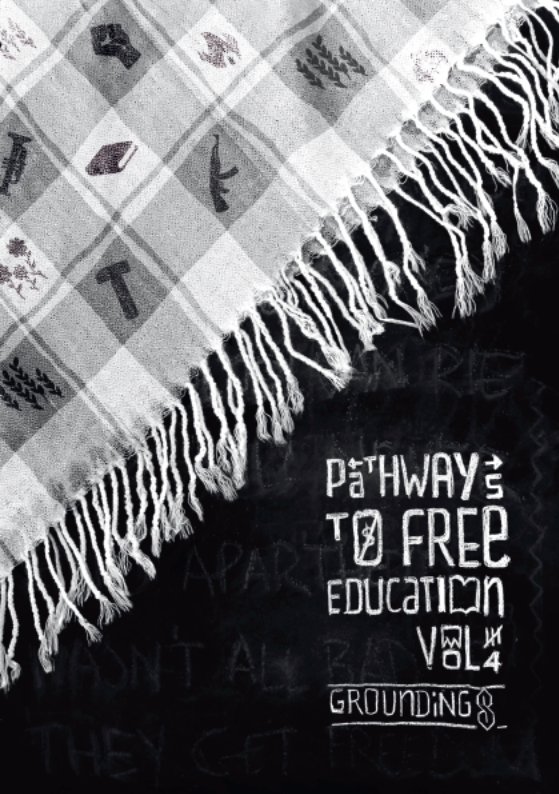
The role of film and documentaries in popular struggle
What you can do to practically get involved!
Nadine Cloete sits with Aaliyah Vayej & Aisha Hamdulay
*AK – Action Kommendant
[AUDIO] Listen in conversation or read the full transcript below
This discussion works through some of the broad and practical considerations around how film and documentaries can be used in popular struggle. It looks at what some of the opportunities and obstacles are in our present context and goes on to encourage all of us to think broader about how we can both participate and support others in different ways to advance the struggle.
The poster for a Free Films Event Series at @ THE INTERIM, a home base for Pathways for several years.
AALIYAH: After the success of your documentary ‘Action Kommendant’ and success within the South African and international film industry, we look to you today to give us advice and guidance on how to use film effectively to contribute to the struggle within which we find ourselves today. Thus my first question is, how do people who do not necessarily want to physically protest but do want to contribute to the struggle and the narrative thereof use film to do so? Where do you start and how do you go about finding your feet when using film as a tool for expression in this climate?
NADINE: (Laughs) I think first of all you must be aware that film is not politically neutral; it’s about images and representation right? So even if you are filming a clip your own ideologies play such an big role about who you’re going to film, angles, duration of the shot – all of that. I think for film you have to be so self-aware because all of that comes out. For example the live stream feature Facebook has is great but let’s say you start editing something, and then ideologies start coming into play in an even bigger way. With AK, part of the reason for its success is because I wasn’t seen as an outsider and people trusted me because of that. Because I was young, genuine and transparent about what I wanted to do as well as tried to discuss as much as possible with his family about what I was doing and who I was speaking to, involving them in the final edit of the film.
AALIYAH: What would you say, in that process of trying to be transparent and honest in your expression, are the obstacles you face when film making? And how did you overcome these obstacles?
NADINE: I think a big obstacle maybe even now when filming protests is, when known in a particular space such as UCT if you go out of that space to a place like UWC or SU the people there may not know you and might not be willing to speak to you. This I overcame by always being honest about what you’re trying to do and try to reach some kind of level of identification with the people you’re engaging with. Where you stand and how you position yourself I think that gets people to trust you, it is so important for those that do not perhaps feel comfortable with being on the frontline of protest action to get into the film making process because we do need more images coming from the inside. I’ve lately started to think about how things especially on social media are being captioned, because you may think a statement has no bias but just check how the image and yourself are being positioned within your caption, for example those in support of FeesMustFall will caption any image differently to that of a news source. Because we are posting things on social media almost immediately, the people that follow you get to be involved on a personal visual basis in the conversation – this is important in also trying to get support for the movement in as well to show what’s really going on.
AALIYAH: What techniques would you suggest to use in order to bring across authenticity in film, if one does not have access to official documents/statements/other resources?
NADINE: There must be an attempt to make it more personal, for example it’s great to film a mass protest but it is even better filming short interviews so you actually hear a voice in the crowd. Try and get as personal as possible. For example in the AK film, before we learn of how radical he became we got to know him as a person first. I know students are not always willing to speak, I think if it’s coming from the inside then people should consider giving that personal approach.
AALIYAH: How do you approach someone on a sensitive topic that could be emotionally charged, such as ‘black pain’ in the Fees Must Fall movement? Without going too far or being too insensitive but still able to extract the truth.
NADINE: If I think about AK, I carried a lot of guilt because I made my characters and interviewees go to certain spaces but I think when someone is comfortable enough with you and willing to go to those spaces – start and be honest with what you’re going to question them on. I have had my experience where I have tried to push and it doesn’t work out either making the interview super awkward or you leave both people feeling uncomfortable. Respect when someone does say no and further ask if there is anyone else willing or able to answer the question comfortably. If someone not familiar in the space came up to me and wanted a response I would also be hesitant so I think it’s up to people within that space to use resources to put things out there.
AALIYAH: What do you think the role of film is within the struggle? In terms of expression,
documenting and contributing to the narrative of a movement like this.
NADINE: Latin American filmmakers I came across wrote on film as a social weapon, using the camera as a weapon – this is a reality in this revolution because you’re going to reach people even beyond your campus, problems and your own country. The way people perhaps keep in touch within friendship circles across the world is through watching the videos we make and post, looking for voices on the ground not wanting to hear the voices of outsiders. Videos are also obviously accompanied by captions now which spark conversations on their own around the issue at hand.
AALIYAH: What are the logistics, process you follow when making a film?
NADINE: If you do want to cover the revolution right now I would suggest following guerrilla styles, because going the route of applying for funding it’s going to take long. You have to use your own resources to cover what’s going on on the ground right now. Getting to know people, covering what’s happening. If you wanted to make a more structured film and get financial support, the National Film and Video Foundation and crowd funding, hosting evenings and getting creative when trying to get funding and pulling resources.
AALIYAH: How do you broaden your audience in terms of increasing the impact and relatability of your film? Providing a source of information and expression to larger than the immediate audience.
NADINE: The way to do this is to deepen your object of attention, in AK I first described Ashley as the son, and school kid who liked music etc. those things that people can immediately relate to. Physically going to places beyond designated screenings, going to places and physically creating an audience and space. People have also stopped seeing students as kids; they see them now as criminals so I guess the job now is to get the audience to identify with them on a different level through the screen.
AALIYAH: It’s hard to show a balanced side of the argument and what is happening on the ground – how does one go about creating a balance?
NADINE: I don’t think you need to be balanced, why because each side is telling their own story anyway. For example management is distributing its own statements and they will always have a bigger audience. So be very clear of your own ideologies because film can essentially be used as propaganda, you need to push your own narrative. In this moment I don’t think we should be worrying about objectivity.
AALIYAH: How do you go further than your given audience? How do you expand your audience?
NADINE: It’s about taking the work to where the people are, physically taking the work into the space. People you want to reach may not always have the resources to reach the material so make it accessible, make people see what you’re putting out there. If you do something on revolution I would recommend playing it to smaller groups so that you can have a proper discussion and feedback session after the viewing, because you can’t engage with an audience of hundreds on the impact or have a Q&A conversation on what people thought and how they felt. Get it into civic centres or so on, but smaller groups so you can have in depth discussion afterwards as well as create a space where people can feel comfortable enough with the amount of people present to speak up. Space is something you really have to take into consideration, whether a space is racially classified and be expected to be open with your thoughts or opinions within the space.
AALIYAH: How important do you think having feedback from audience members is? Or a
discussion session after a screening?
NADINE: The feedback helped me to think about where I screen and how I screen, you can’t always control how people are going to respond to your work but it has meant that my politics keep changing and my opinions have been influenced by how people have perceived my work. I think people should be open to their views changing through conversation and I think it’s a great thing that it does, we need to be open to being challenged by work or content. Otherwise how do you grow? You could be exceptionally aware of your own ideologies and positionality but people from other backgrounds with different views may pick up on things you haven’t and interpret things according to their own understanding so bringing a new angle to your work – and that’s okay and you have to accept that. As long as you’re making an impact and creating a conversation.
AALIYAH: Any other advice for young filmmakers that are covering the revolution right
now?
NADINE: Working as a collective when you’re doing your work or when filming, remember the camera is also a weapon and use it wisely to further the revolution in your own way. But always be aware of your positionality; check yourself all the time on what you’re filming and who you’re filming and why. It’s about changing the narrative through forms of representation.
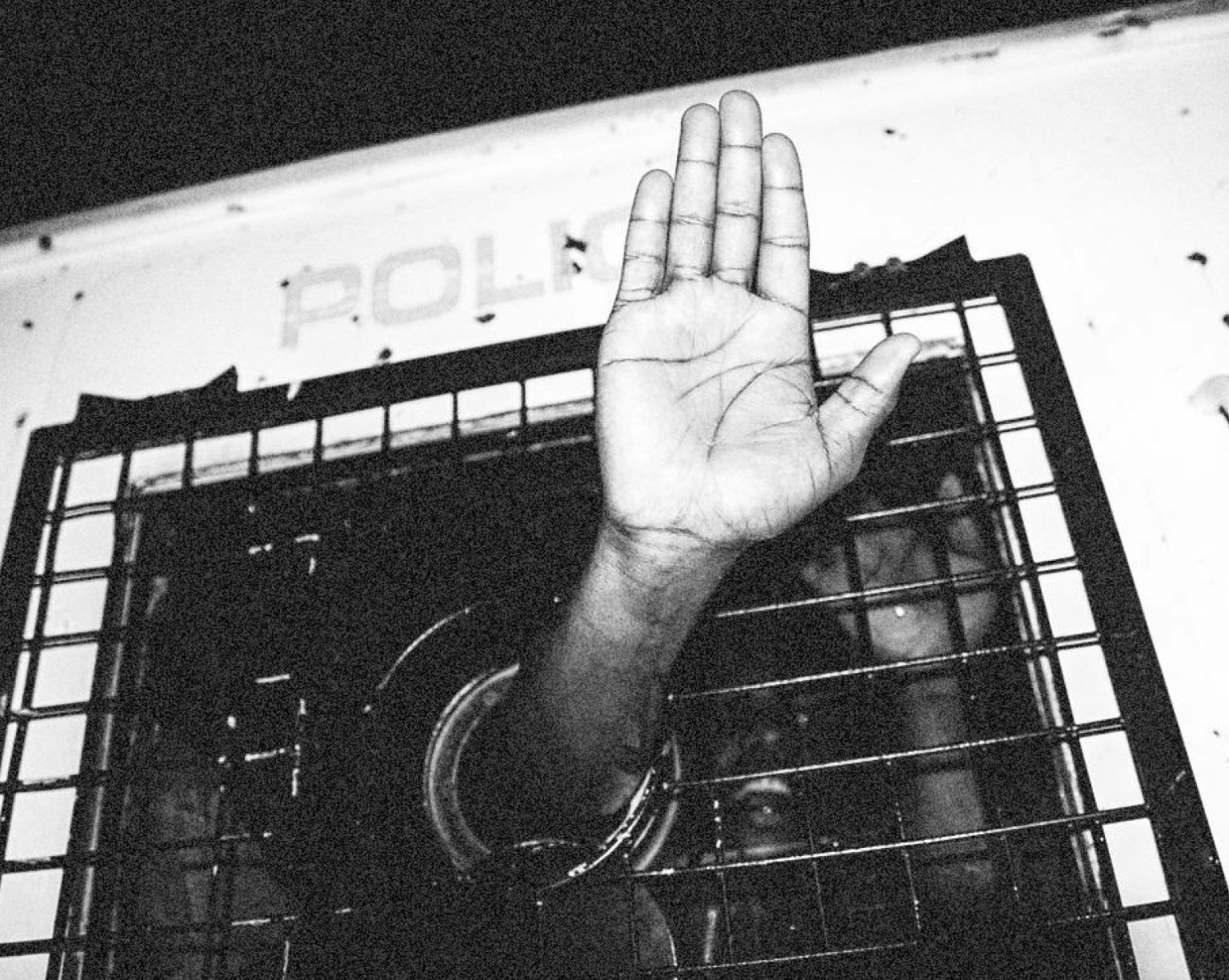
▴ Photography by Leila Khan
PTFE Winter school 2017
Reflections on the Pathways to Free Education Winter School
by Lorna Houston
Pathways to Free Education popular education collective that evolved out of the #FeesMustFall strikes of 2015 onwards has thus far revolved around self-publishing educational booklets that bring voices from across educational institutions, community activist spaces and trade unions largely based in the Western Cape. The Winter School was Pathways’ first attempt at a political education programme aimed at students, workers and local community activists. It also launched Pathways’ Volume III: Third world education and social welfare, and offered a platform for activists to engage the content.
The Winter School was an attempt to create and facilitate an education space through which activists with different interests and foci could meet in solidarity in a non-sectarian space and discuss key issues in the ongoing local and global crisis caused by the continued impact of colonialism and the capitalist system. The school was held in collaboration with the Student Consciousness Project, CIPSET and the Education Policy Consortium.
WHO
A variety of student activists, worker unions, community activists and cultural collectives attended. The participants included community activists from the Housing Assembly, university student activists from Cape Peninsula University of Technology, the University of Cape Town and the University of the Western Cape, Bonteheuwel Legacy Arts Collective (BLAC), Pathways members and artists engaged in activism. Participants were Cape Town-based but university students from as far afield as Ethiopia, Argentina and Norway also attended. Three sessions were co-hosted by various local organisations:
- A session on Agriculture and Education with eKasi Project Green at their food garden in C-Section
- A session on Electricity, Water and Education with Housing Assembly at their office in Khayelitsha
- A session on Arts and Education with BLAC in Bonteheuwel.
FORM
The Winter School was run every Saturday for five consecutive weeks. The first four workshops were held in Khayelitsha, including at the Department of Coffee, the Housing Assembly offices located in the Catholic Welfare and Development centre and eKasi Project Green’s Food Garden. The final workshop was held at the Multi-purpose Centre in Bonteheuwel.
The process of the Winter School was new to all who participated and thus incorporated a classic cyclical process of Action-Reflection-Adjustment-Action. Mid-weekly reflection and planning meetings took place where participants met to reflect on what took place in the previous session and planned for the next one, incorporating new information that flowed from the reflections, and any necessary adjustments. While these meetings were small, based on the availability of participants to meet though open to everyone, decisions taken thereto shaped the next workshops and were welcomed by all other participants. The small meetings of delegations from Housing Assembly, Pathways and BLAC were entrusted to act as a sort of steering committee to guide the smooth running of the weekend workshops. Transport was provided to enable comrades’ attendance at the meetings and the weekend workshops.
Initially the format was for participants to read a relevant section or selected articles from the Pathways Volume III in preparation for the session, but this approach was quickly abandoned as it created a division between the university students and the community activists. The winter school’s aim was not for the students to lead with input or to use academic or complex language, and the participants’ feedback at the first workshops led to quick and successful adjustments to the programme which resulted in a more effective, meaningful and enjoyable winter school. In the new format, workshops started with an ice-breaker or focused meditation, followed by small group discussions on a set of questions to solicit information and discussion from everyone in the room. The feedback from the discussion was drawn together by a discussant who linked the discussion to the readings. Everyone was then encouraged to investigate the topic further by doing the readings in the Pathways Volume III on their own. Each session ended with a shared meal.
WORKSHOPS
5 Workshops 15 July – 12 August 2017
WORKSHOP 1: National Liberation Movements & Revolutionary Organisations
This session introduced the Winter School and launched the Pathways to Free Education Volume III:
A documentary screening looking at the development of and challenges facing the Grenada Revolution, along with accompanying readings, was the focus of discussion.
WORKSHOP 2: Popular Education Programmes
Central theme: Mapping education activities in our communities and reflecting on the legacy of SACHED.
Collectively, we engaged with what education means for us and linked that to different processes and institutions that do education work in different contexts. Powerful inputs on the nature and sites of education, knowledge and learning as the programme began to gain momentum.
The group also went on to engage with the SACHED popular history timeline published in Pathways to Free Education Volume III.
Intergenerational conversations offered a deeper appreciation of the historical context of the current decolonial protests sparked and spearheaded by students and workers as linked to popular education goals during the anti-apartheid struggle which were betrayed post-apartheid.
WORKSHOP 3: Agriculture and Education
Central theme: How do we understand Food and Agriculture.
The workshop was located at Ekasi Project Green’s food garden on the grounds of Vuzamanzi School. We had a tour of the food garden and learnt about worm composting.
The small group discussions were vibrant, with a stronger than usual Housing Assembly delegation in attendance and a number of cadres from the local community of C-Section. The questions ranged from growing food in our backyards and access to land in order to grow food, to understanding how food is made and who are the farmers, farming methods, commercial farming vs subsistence farming, and communal farms for the benefit of the community, these were all interrogated.
The food garden was growing beautifully, spinach, broccoli, lettuce, kale, spring onions, beetroot, parsley and celery were harvested and with a few added ingredients we cooked a communal lunch. The children from the area came rushing over to the listen to the poetry and live music that was provided by local artists who attended the workshop. We fed about 90 people a tasty and colourful vegetarian meal. The atmosphere was uplifting as people made new friends, chatted in small groups and engaged in further discussions about community campaigns and issues.
WORKSHOP 4: Electricity, Water & Education
Central Theme: Unpacking our understanding of Energy and Water
The privatisation of water and electricity through prepaid metering using examples from affected Cape Town communities served as a central focus. Podcasts replaced readings for this week.
specifically: Podcast 786 ways to save the planet in partnership with AEPEP on struggles against prepaid use of Electricity in Cape Town
Critical questions: The discussions brought to the fore the daily struggles of the working class and poor. Stories were shared about the costing of electricity, mark-ups on electricity purchases via being forced to use certain service providers, and the impact of unaffordable electricity on daily living. Community activists also shared the problems encountered by people in the townships and low-income residential areas of faulty water meters and the water drip system that forced large households to survive on less than 30l of water per day. It became apparent that poorer communities were being forced to endure more severe water restrictions than the rest of Cape Town’s residents, a fact that was not publicly known. The discussion centred on the critical challenges facing families and communities when these two basic needs become unattainable for daily survival.
An outcome of this discussion was a survey on electricity access and usage conducted by Housing Assembly and Pathways.
WORKSHOP 5: Arts and Education
Central Theme: Dialogue on our understandings of Art and its role in society
Participants undertook an exploration of the role of arts education, art-anchored activism in South Africa and the role of art in contemporary struggles as well as the challenges and opportunities for establishing creative spaces for different modes of challenging power.
The programme commenced with a visit to the Bonteheuwel community library and a walking tour of Bonteheuwel by comrades of BLAC, which provided a narrative of the story of the Bonteheuwel community’s resistance to the apartheid government in the 1980s.
Critical questions and intense discussions ensued about activism in communities failed by the post-apartheid government.
The conversations were wide-ranging and kicked off by BLAC’s use of arts to inspire community activism in Bonteheuwel. Is art just about painting, drawing, performance, music, writing, photography, etc.? Or is art about everything we do? If art is everything we do and my protest is art, then when the police shoot me, is that not art too? What is art and creativity? What is art and power, protest art, cultural appropriation? We are all artists! Why don’t we value art? Why are artists often underpaid or asked to do favours?
There was no related reading this week. We ended with an open jam session and comrades shared poetry, singing, hip-hop rhymes with accompaniment by the djembe drum and engaged in a dance class to end off a very inspiring, educational and comradely Winter School!
PTFE Winter School Programme 2017
Date: 15 July
Session title: Introduction to: National Liberation Movements & Revolutionary Organisations
Day description: This session introduces the PTFE Winter School and launches Pathways to Free Education volume III: Third world Education & Social Welfare
A documentary screening looking at the development and challenges facing the Grenada Revolution along with accompanying readings which will be engaged with in a discussion.
The afternoon session will have a discussion on the legacy of different housing reform projects in the USA and South Africa, involving discussants who are activists in both locations.
22 July
Agriculture and Education
This session will be (ideally) located near a farming community and will be framed by a facilitated discussion on Agrarian reform in Zimbabwe using the corresponding Pathways vol. III chapters.
Discussion on the 2012-13 and 2016 farm worker strikes.
Discussion on building urban and rural solidarity.
28 July
Education Programmes
This session will begin with a facilitated discussion from Pathways vol. 3 looking at the history of SACHED.
Another facilitated discussion will be held the Ghana & Tanzania chapters in vol. 3 on Free Education.
Discussion & debate on the status and direction of #FeesMustFall going forward
5 August
Social Welfare Systems
This session will begin with a facilitated discussion on the history and status of the SASSA grant crisis in South Africa.
Another facilitated discussion will happen through a collected reading of Pathways vol. 3 looking at the Bolsa Familia from Brazil and drawing comparisons to South Africa.
12 August
Energy Politics
This session will begin with a documentary screening & discussion with readings on “Black Power: The Kwame Nkrumah story” which chronicles the development of the Akosombo dam in Ghana. A facilitated discussion will be held on the privatisation of water and electricity through prepaid metering using examples from affected Cape Town communities.
A discussion will then be conducted on the opportunities and challenges presented by renewable energy technologies for contemporary struggles involving voices from universities, TVET colleges & community activist spaces respectively.
19 August
Art & Education
This section will begin by a presentation and discussion on the role of Arts education & Art anchored activism in South Africa
A discussion will then be facilitated on the role of art in contemporary struggles and on the challenges and opportunities for creating space for different modes of challenging power.
26 August
Health & Education
This section will engage with texts from Pathways vol. 3 on South Africa’s path to National health insurance.
A presentation and discussion will then be facilitated on the history and lessons from the Treatment Action Campaign.
A debate will be facilitated between students from a medical school and a nursing college in the Cape alongside a community activist working on community healthcare on “Connecting struggles and curriculum reform for liberation”
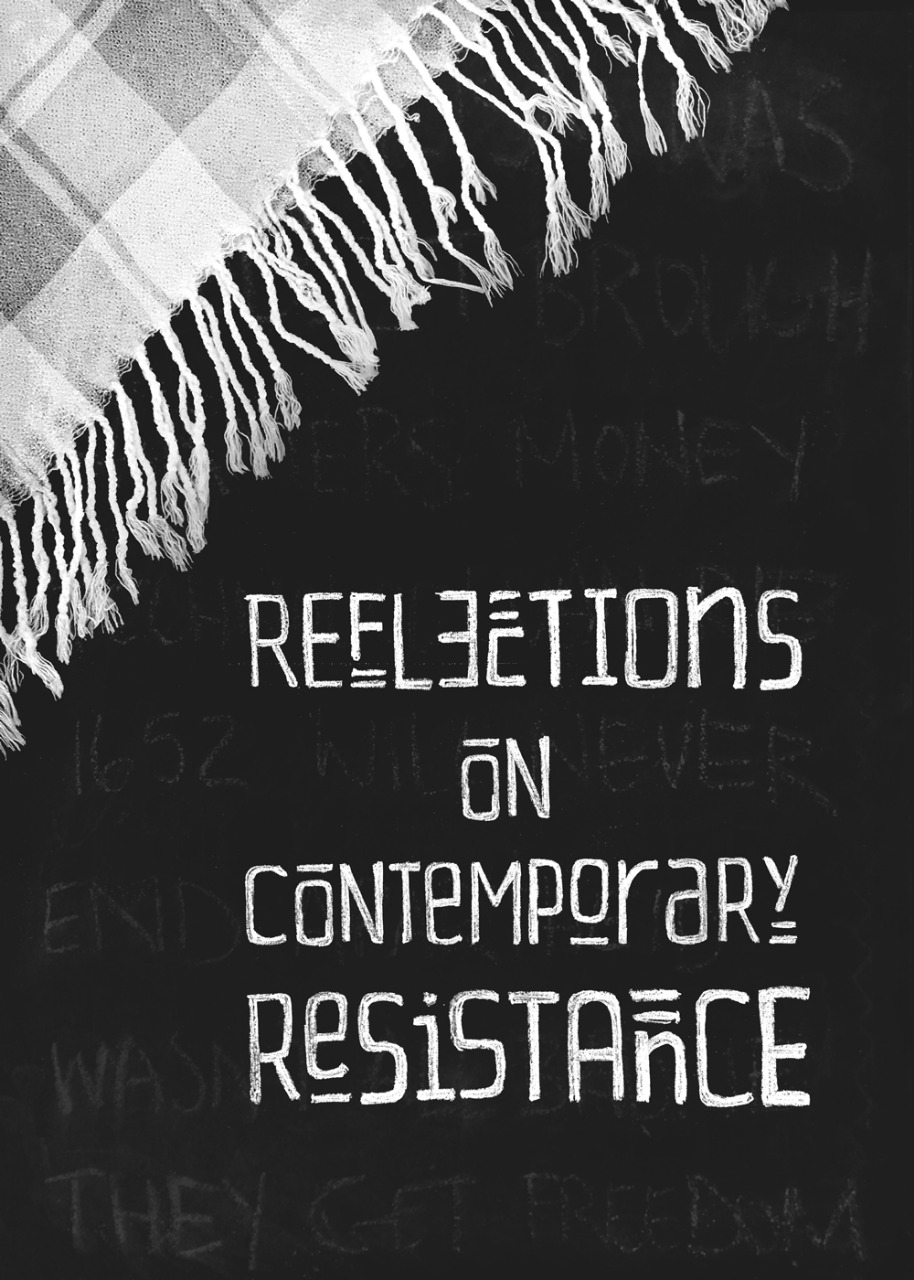
action & solidarity
Since its inception in 2017 the Pathways to Free Education Collective has organised, co-hosted and participated in several events in solidarity with specific movements in Southern Africa and abroad.
50 years since the Arusha Declaration
[PUBLIC DISCUSSION] 28 October 2017 at Community House in Salt River, Cape Town
A critical public discussion looking at the historical context, writings, speeches and trajectory of the Tanzania move towards National Liberation marked by the landmark Arusha Declaration now 50 years ago.
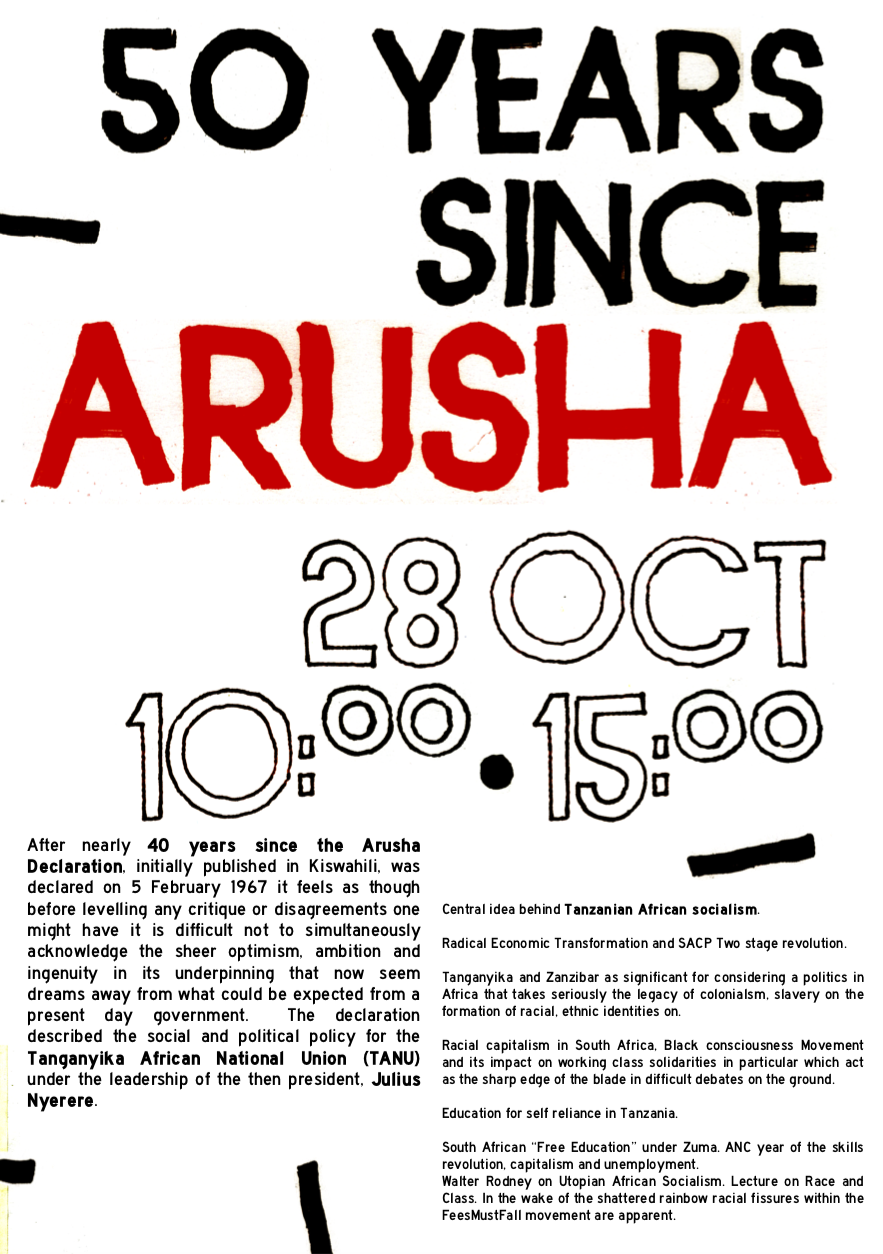
more on Tanzania…
[AUDIO] Pathways in conversation with Jukwaa La Wajamaa Tanzania – Tanzanian Socialist Forum
We caught up with members of Julawata – the Tanzania Socialist Forum – to hear and learn more about the inception of the movement; its key activities, the contemporary challenges in Tanzania that Julawata is attempting to respond to, and the kinds of links the Tanzania socialist forum has made with community based groups, trade unions and student movements. The conversation also explores the future plans of the Tanzania Socialist Forum and how international movements can make contact and extend solidarity with Julawata. In this podcast Pathways collective member and activist Simon Rakei speaks to members of the Julawata collective: Tumbu Ladislaus, Jasper Kido, Christina Mfanga, Sabatho Nyamsenda, Monica Shank and Joel Ntile.
Human Rights
Complicities with coloniality versus possible opportunities for decoloniality
[WORKSHOP] 23 February 2017
A workshop with Prof. Nelson Maldonado-Torres based on his seminal paper On the Coloniality of Human Rights (2017).
Prof. Maldonado-Torres shares his ideas on human rights as a tool that promotes coloniality (colonialism/apartheid by other means) via enabling a liberalism that prevents our radical emancipation from modern racism, patriarchy, class and other forms of oppression. We share with Prof. Maldonado-Torres and each other our ideas about coloniality of human rights as we experience it as ‘recipients’ mainly ‘paper’ rights post-apartheid or as its advocates of human rights in civil society under democracy, and – we all explore possible ways to decolonise the human rights approach towards decolonisation.
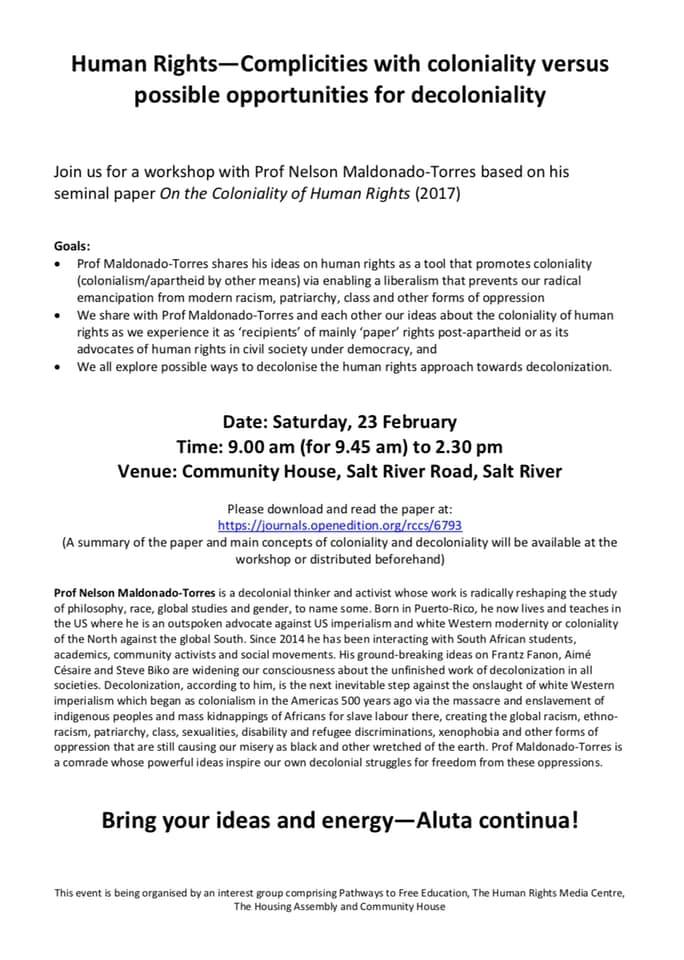
Art Book Fair of the Africas
In 2018 members contributed to the African Art Book Fair at the Centre Culturel Douta Seck in Dakar, Senegal. Later that same year members ran a workshop 50 years since Africa’s 1968: what legacy? at The Art Book Fair Of The Africas at La Colonie in Paris, France.
50 years since Africa’s 1968: what legacy?
Pathways to Free Education conducted a round-table on popular history, adopting the prism of the heritage of students fights and workers struggles in Africa in the wake of 1968, when strikes reached a global momentum. The session drew on the experiences and the personal knowledge of the participants to questions the dreams and the realities of the liberation movements through their pathways in continent, with a particular focus on South Africa and Cape Town, where the collective is based.
…
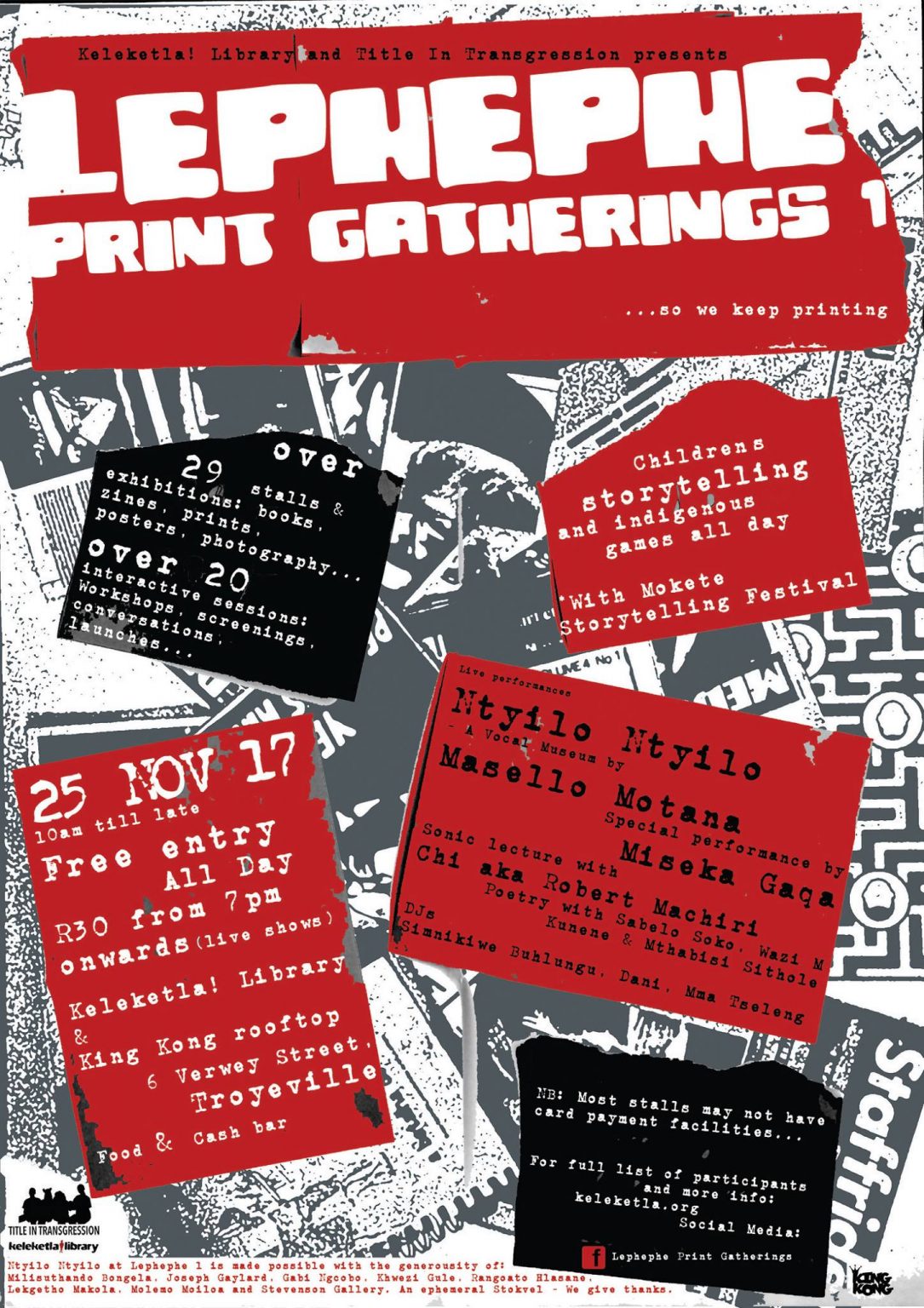
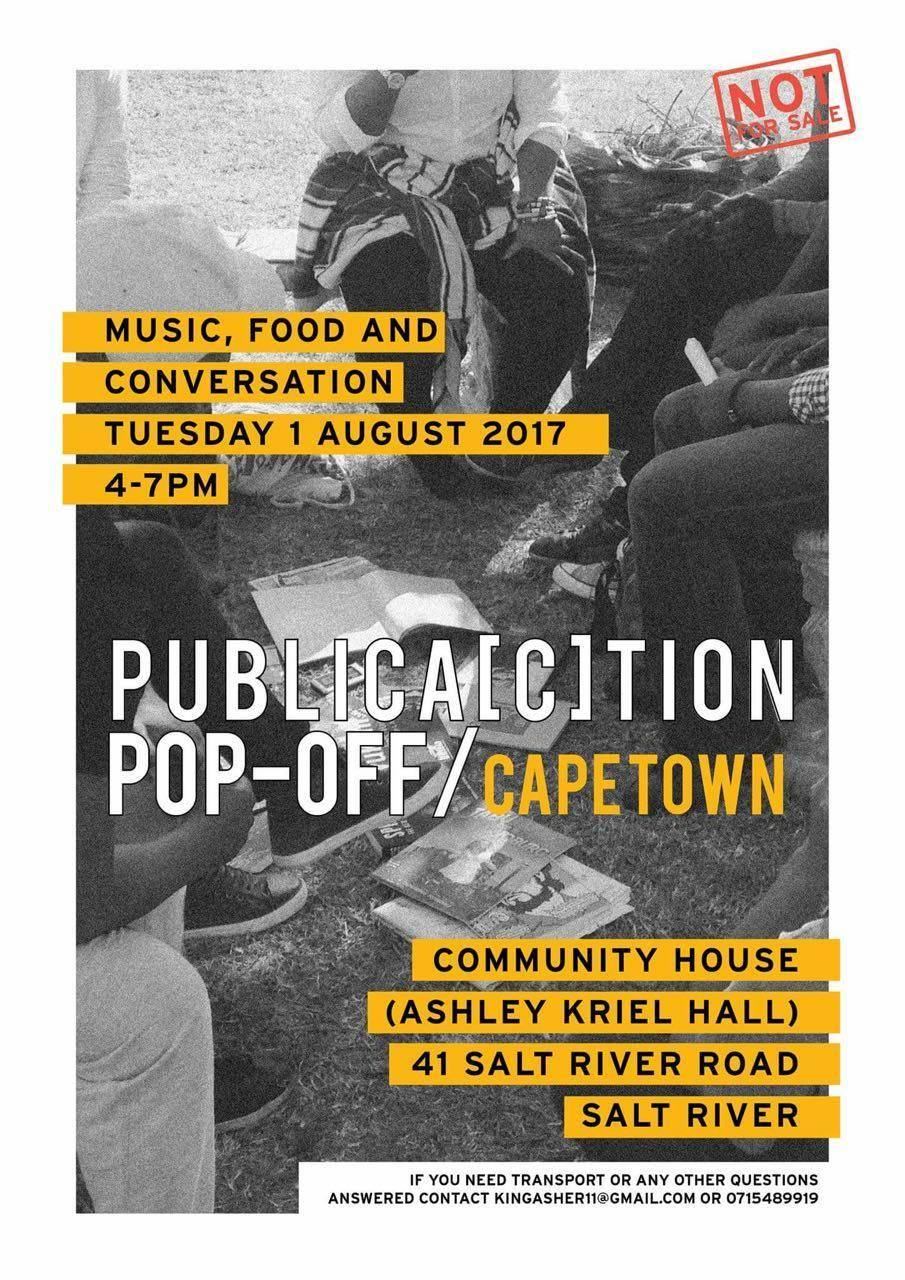
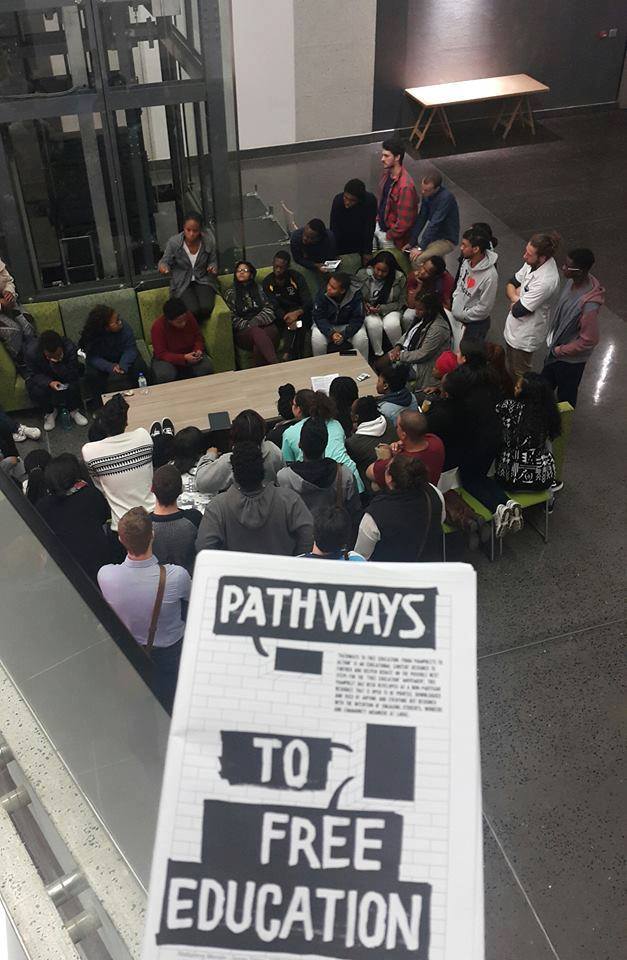
The Interim
The Interim was created around 2016 as an open, and safe place for creative, critical engagement away from the limitations of institutional spaces. A collective space for live music, art and education located in a factory unit off a busy main road, it became a home-base for Pathways to Free Education, The Interim People’s Library and the Kensington branch of the Children’s Movement until 2021.
The Interim People’s Library was a space in the process between the present and the revolution. It worked towards being a safe space for people to get together in the company of radical books, music and each other – a space for collective study, conversation, fun, art, reading, learning, sharing and chill. An independent site that can develop and nurture radical intellectual practices, a library where activists, school students, visiting scholars, workers and teachers can come to work, talk and access relevant and exciting resources. Striving to be a ‘library beyond books’, the People’s Library interests lay in thinking about and experimenting with creative ways of organising and presenting materials so that they are accessible and activated. It was imagined as a site of cultural work, hosting workshops, gatherings, discussions and performances of various kinds and the home of the Pathways Collective.
Pathways to Free Education
Within the throes of the movement for free education at South African universities in 2015–2016, Pathways converged as a group of people who wanted to continue discussing and planning the non-partisan movement and struggles for free education. The Pathways collective wanted to create space to learn about, participate in, and contribute to the debates around free education, and through that, build relationships with people and collectives working in different sectors who were interested and committed to the project of free education. This teaching tool offers digital encounters with Pathways’ movements to date.
Toward the end of 2015, the South African student and worker movements became both increasingly fragmented by internal political differences, and demobilized by the repressive apparatuses of the state and capital. As a result, a lot of spaces for debating and strategizing around free education on campuses disappeared. Additionally, a lot of energy got diverted to responding to the tactics of repression: dealing with panic attacks, resting, bailing cadres out of jail, and getting wrapped up in seemingly endless university disciplinary procedures.
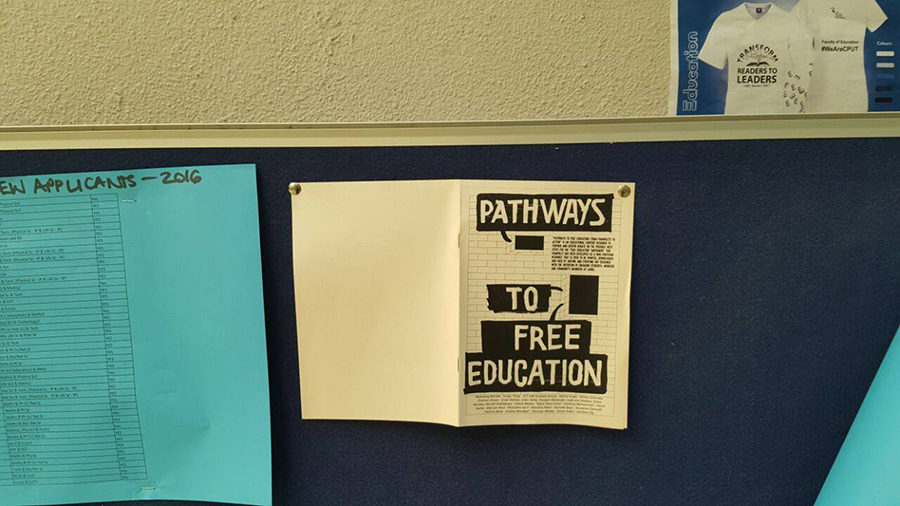
▴ An issue of the published zine produced by pathways to free education pinned to a notice board at the University of Cape Town
The shutting down of autonomous Black educational spaces that were started by students at universities, and the mass-popular nature of the uprisings had led to a situation where the movements weren’t engaged in the type of critical education work that had initially been its basis. Furthermore, despite some isolated attempts by Black students to build relationships with progressive organizations beyond the academy, #feesmustfall and #outsourcingmustfall remained primarily centered on universities. As a response to this combination of circumstances, Pathways converged as a group of people who wanted to continue the work to which we had been participating on campus; collectively discussing and planning the non-partisan movement and struggles for free education. We wanted to create space to learn about, participate in, and contribute to the debates around free education, and through that, build relationships with people and collectives working in different sectors who were interested and committed to the project of free education. We had the position that education is something that implicates and affects everyone, and is connected to struggles around wages, disability, land, patriarchy, sexuality, housing, etc.
This text is excerpted from ‘Pathways to a Free Education: Knowledge Production, Community, and Solidarity’ by Asher Gamedze as published in Funambulist, March 2019. To read the full article click here.