Katamat
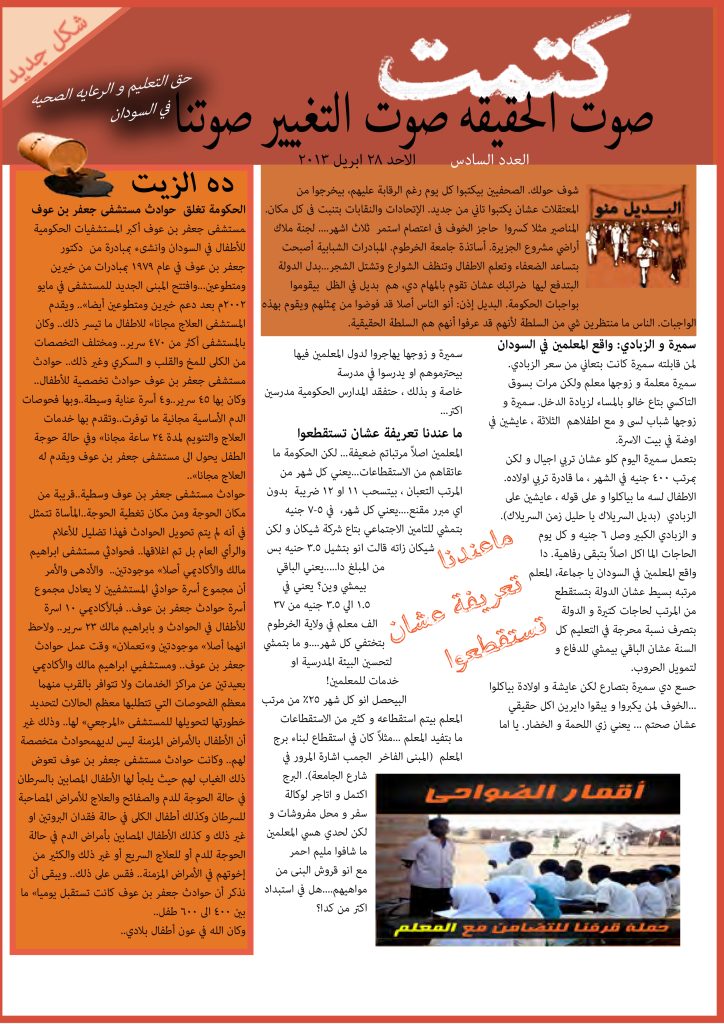
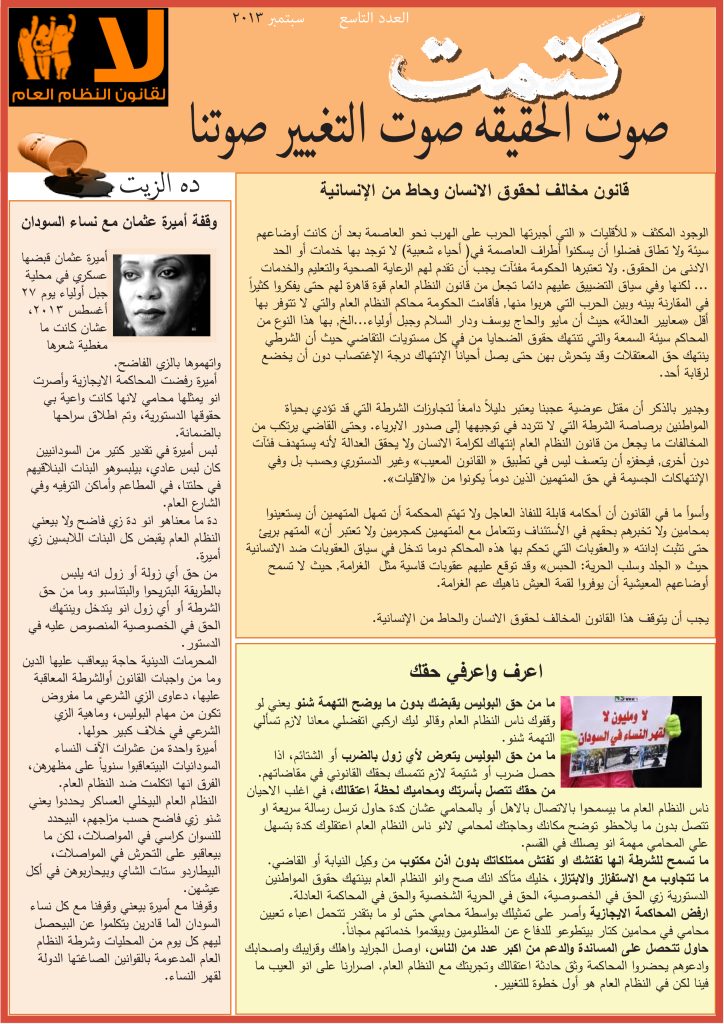
In 2012/2023, eight print issues of KATAMAT were produced by Girifna activists, amounting to approximately 80,000 copies distributed in different cities across Sudan. KATAMAT (which comes from the word mute is also a youth slang for a protest or an arrest campaign) was between 2-4 A4 pages and it was born following the 2012/2013 protest movement which saw Girifna members witchhunted as part of a crackdown on youth activism and many had to go into exile. Those remaining in Sudan had to think of ways to stay relevant and also stay safe.
Girifna is a youth-led pro-democracy movement founded in 2009 to mobilise against the 2010 election of Al-Bashir (1989-2019) and it continued as a street-based movement. The group was known for its street work, it organised public talks in markets and universities at a time when politics in Sudan was confined to homes and the civic space was suffocating.
KATAMAT which was produced in Arabic served an important role during the period directly after what came to be known as Sudan Revolts, when the security of Girifna members was still a concern and using the Girifna logo was problematic. Due to growing demands, the editorial line shifted to thematic topics such as: East Sudan (issue 5 and issue 7), the right to health and education (issue 6); No to War (issue 8) and Public Order Law (POL) (issue 9). This shift to thematic issues instead of news focused issues allowed KATAMAT to be used as a platform by professional groups in the civil society (e.g.: teachers) and by women’s rights groups such as “No to the Oppression of Women” in the case of the POL issue.
The special interest in producing KATAMAT for East Sudan, meant that its need and popularity in that region was the highest. In November 2013, Girifna got a request from Gedarif-based youth who wanted to replicate KATAMAT for the town of Gedarif, with a new magazine called Al Khalas; produced under the banner of a local civil society effort called Al Khalas Initiative. They approached the movement to give them help with graphic work as hey compiled and produced all the articles.
The sustainability of KATAMAT was always a question the movement had in mind. Bearing in mind that Gifina’s membership was mainly composed of students and youth, producing KATAMAT was time and resource consuming and a real team effort, from gathering contributions, to doing the basic graphic design work, to printing and distributing. The hope was that this model can be replicated in other regions such as the Darfur region since there was limited internet access and this justified the need for a hardcopy grassroots magazine.
When the 2019 revolution began, many of us recognized Girifna as a critical part of the revolutionary infrastructure that was built over many years to eventually lead the street and keep the momentum for many years. KATAMAT is just part of this experience, but it is a critical tool for resistance and for movement-building that requires documentation.
Reem Abbas is a feminist activist, researcher, and writer. Her book (Un)doing Resistance: Authoritarianism and Attacks on the Arts in Sudan’s 30 Years of Islamist Rule was published in 2023. Her essay “Smuggling Books into Sudan: A Brief History from 2012 to 2016” was published in the Art and Solidarity Reader: Radical Actions, Politics and […]
Dalia Haj Omar has over fifteen years of experience in international development, and has spent the last eight years leading strategy and programs in fragile and complex environments across West Africa with USAID’s Office of Transition Initiatives. She managed multi-million dollar projects through community-led programming focused on peacebuilding, stabilisation, conflict mitigation, preventing violent extremism, and […]